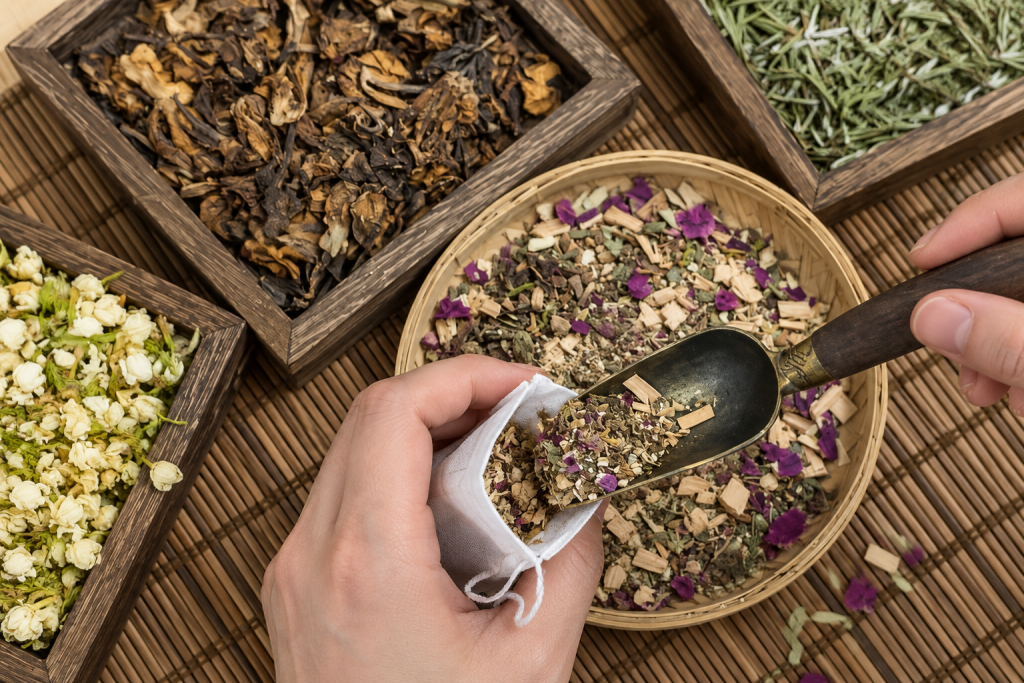
Scent as a small courtesy · Handmade in rural Zhejiang, China

How to Make a Sachet for Your Stored Clothes
Seal a small bag of dried flowers in with your stored sweaters and they come out smelling faintly of lavender or rose. How sachet makers dry, check and pack it.


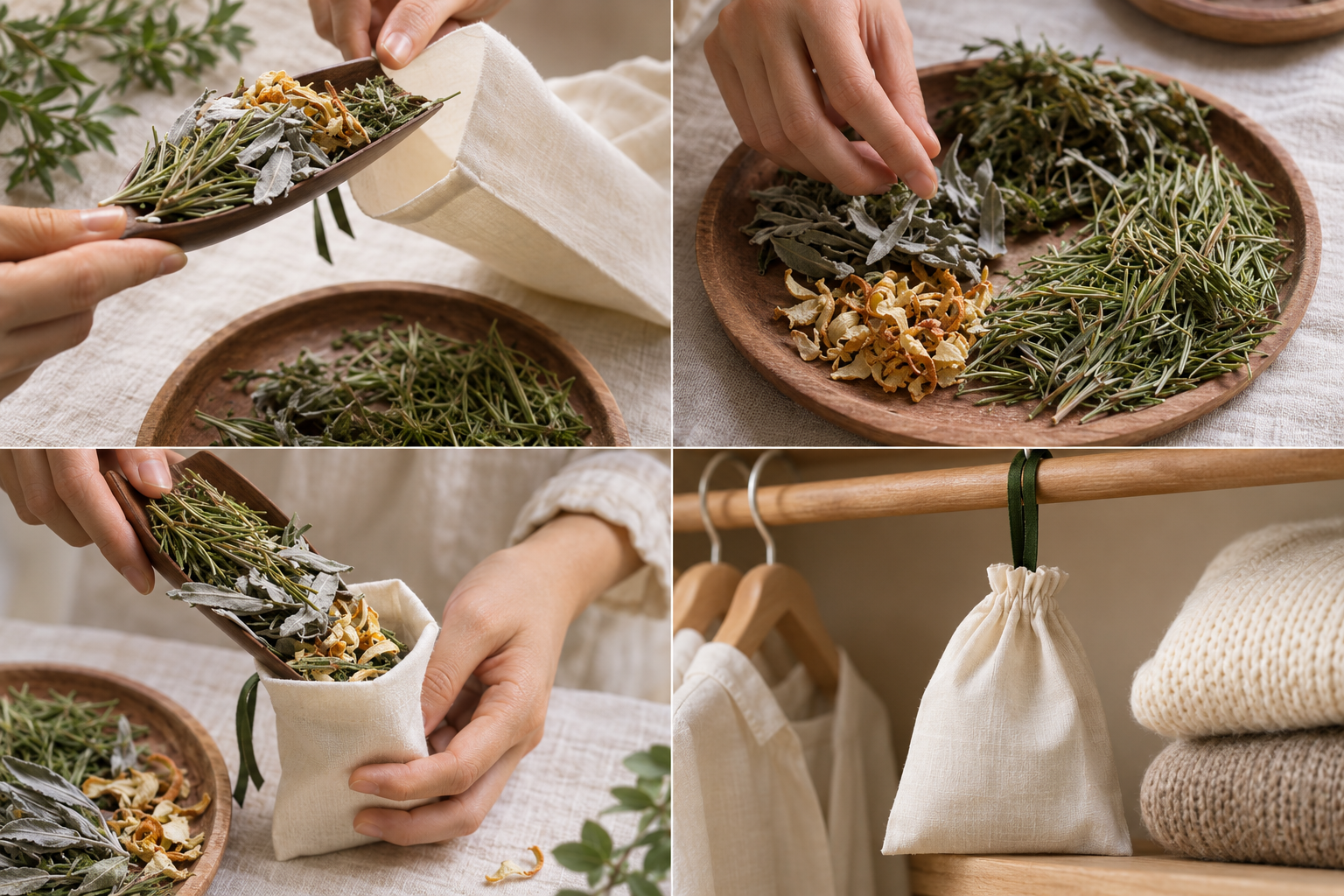
Making a sachet is easy. Using it in the right place is the harder part. Hang one in an open closet and the scent soon fades. Seal it into a storage bag with your clothes for a season, and the scent builds up inside. Next year, your sweaters come out smelling faintly of flowers. We make sachets and work with these dried flowers every day. Here’s how we dry, check and pack them, and which mistakes waste the effort.
The Short Answer: Six Steps
- Wash the clothes first. Sweat and skin oils left in the fabric turn yellow in storage and attract insects.
- Air them and dry them in the sun until they feel completely dry.
- Fold them and put them into a storage bag or box.
- Make a bag of dried flowers. Lavender, rose, osmanthus and cedar shavings all work. Put them in a little cloth pouch and tie it shut.
- Lay the sachet on top of the clothes and seal it in with them.
- Keep the bag somewhere cool and dry, and open it next season.
How to Store Sweaters and Other Clothes First
Scent is the last step. If the storage goes wrong, no sachet can fix it.
You put your summer clothes away. A year later they smell musty, and the collar of a white shirt has turned yellow, even though everything went in clean. The washing wasn’t the problem. The storage was. Sweat and skin oil you can’t see turn yellow and stale after a few months in a bag. Pack anything slightly damp, and it grows mold.
So three things can’t be skipped: wash them, air them, and dry them in the sun.
People argue a lot about what to store clothes in. Some say vacuum bags save space and work best for comforters. Others say the bags leak over time and puff back up, and the stiff corners take up room, so they went back to non-woven fabric bags. Our view is that vacuum bags are fine for comforters and synthetic clothes. Wool and cashmere need to stay lofty, so don’t press them flat for long. Whatever you use, it has to seal, because the sachet depends on that.
If your closet is damp, add a box of moisture absorber. The hanging bag kind can leak and stain a whole closet of clothes. A box is safer.
Why a Sachet Works Best Sealed In
We once wrote about whether drawer sachets work. Our answer was that a sachet in a drawer won’t make your clothes smell of it. It comes down to concentration. Dried flowers release their scent a little at a time, and a drawer that opens every day lets it out before it can build up. Someone who tested closet sachets in China put it plainly:
“Dried flowers don’t spread their scent well. They don’t reach far.”
In an open space, that’s true, and not only for sachets. People say the same about reed diffusers: they only smell anything when they pull the reeds out. Camphor-wood strips hung in a closet get the same complaint. The smell was gone before long.
A sealed storage bag is different. It’s small and stays shut for months, so the scent has nowhere to go. It builds up inside the bag and settles into the fabric. A sachet holds on to its own scent the same way.
Chinese households understood this long ago. Chen’s Incense Manual (Chen shi xiang pu), a Song dynasty collection, lists several “clothing scents.” Some are just aromatics ground coarse and laid in a clothes chest. Families used to keep camphor-wood chests for quilts, bedding and their best clothes. With the lid shut, the wood’s scent stays inside. Chests that are decades old still smell of camphor when you open them. If you use camphor wood, keep it away from children and pets, use it in well-ventilated areas, and avoid prolonged direct skin contact.
How to Make a Sachet for Storage
Choose
Use what you like. There’s no recipe and nothing to blend.
- Lavender: the most common choice. A clean herbal scent that suits wool and cotton.
- Rose: sweeter and softer. Good for clothes worn next to the skin, and for pajamas.
- Osmanthus: the sweet scent of autumn, with a hint of apricot.
- Cedar shavings: a dry, woody scent for coats and men’s clothes.
One is enough, though you can mix two or three.
Dry
The flowers have to be completely dry. Damp flowers sealed in a bag mold first, and the whole bag of clothes goes with them.
Sun is the simplest way. To dry lavender for sachets, cut it with the stems, tie it in bunches and hang it upside down somewhere airy, or spread it out in the sun. It’s ready when the buds drop at a touch and feel brittle. Pull roses apart into petals and spread them in the sun. Osmanthus flowers are tiny and spoil if they stay damp. Some people in China dry them in an oven on the proofing setting, at about 40°C (104°F), for a few hours. Don’t rinse osmanthus first, because washed flowers turn black in the oven. If drying your own is too much work, buy flowers and herbs already dried. Plenty are sold online, so pick ones that smell clean, with no trace of mildew.
Check
This is the step people skip. Dried plants can still hide insects. If the flowers carry insect eggs and sit sealed with your clothes for months, the clothes are ruined. So check twice before packing:
- Look. Spread everything on a sheet of white paper. Check for insect holes, powder, mold spots and clumps, then smell for mildew. If anything seems wrong, don’t use any of it.
- Sun it. People in China air quilts this way. The quilt goes into a black plastic bag in strong sun for a few hours, and the inside of the bag can pass 60°C (140°F). Dried flowers and herbs can be sunned the same way. Afterward, spread them out to let the moisture escape, then pack them.
Pack
Use a small cotton pouch, or wrap the flowers in a piece of cotton or clean paper, and tie it tight. Don’t scatter loose flowers among your clothes. Petal color and oil can mark light fabrics, and the crumbs are hard to clean out.
One sachet per storage bag is enough. Lay it on top of the clothes.
Replace
Use a new one each season. By the time you open the bag next year, the scent has faded. Squeeze it and you’ll still catch a little, but don’t count on a second season. Make a fresh one.
The Day You Open the Bag
The scent is strongest the moment the bag opens. A season’s worth comes out first, then the smell of the clothes themselves. Lavender reads cleaner, and rose a little sweeter.
Shake the clothes out and hang them for a while, and the scent fades to a thin layer on the fabric. You notice it up close. Don’t compare it with laundry scent beads. People who use those say clothes left in the closet for days still smell strong when worn, and the scent comes out whenever the fabric rubs. That’s fragrance oil. Dried flowers are nowhere near that strong. They leave a light plant scent that doesn’t crowd anyone or sting the nose.
If you open the bag and smell mildew or staleness, the problem started before storage. Either the clothes weren’t fully dry or the sachet got damp. Scent can’t cover mold, so wash and dry everything again.
Or Use One of Ours
If you’d rather not dry, check and sew your own, use a ready-made one. Our Singular Rose · Carried is the same idea. It holds two Chinese roses, roselle, Buddha’s hand, aged tangerine peel and mint, dried, picked clean and coarsely crushed, in a cotton-linen inner pouch. Each one comes with a sealed spare.
Most days it’s a little scent you carry with you, and it makes a good gift. When the seasons change, seal it into the storage bag with your clothes, and next year they’ll carry a trace of rose. For more on where sachets come from and how to use them, see What Is a Sachet? and our Herbal Sachets.
FAQ
Should Sweaters Be Folded or Hung?
Folded. On a hanger, a sweater gets bumps pushed into the shoulders and slowly stretches longer. Fold it flat, then put it in the storage bag.
What Goes in a Sachet?
Dried flowers, herbs or wood shavings. Lavender, rose, osmanthus and cedar are common. One is enough and there’s nothing to blend. What matters is that it’s fully dry and clean.
How Long Does a Sachet Stay Fragrant?
There’s no fixed answer. It depends on the material and where you keep it. In the open, the scent fades fast, and even camphor-wood strips draw complaints that the smell was gone before long. Sealed in a storage bag, it has nowhere to go and lasts much longer. A new sachet each season is the easy rule.
Will Dried Flowers Stain My Clothes?
Loose ones can. Petal color and oil may mark light fabrics. In a tied cotton pouch, they won’t.
What Is a Chinese Sachet?
A small cloth bag of dried flowers, herbs or spices. In China, children wear one at the Dragon Boat Festival, and people carry them or hang them by the bed. Song dynasty incense manuals also list “clothing scents” made for clothes chests. Read more in What Is a Sachet?

Do Drawer Sachets Work?
Drawer sachets give you a soft scent when you pull the drawer open. They won't scent your clothes,…
What Is a Sachet? How to Use a Scented Sachet
What is a sachet? A small cloth bag of dried flowers and herbs. Here is what scented sachets…