Handmade in rural Zhejiang, China

Packaging
Packed to Arrive Safe
Every piece is made by hand in small batches.
So the first job of the packaging is simple:
to get it to you safe.
Safe
Reliable
Eco-minded
Reusable
Packed outside
Three layers of paper, each with one job: getting your order to you safely
Strength
The outer carton
The outermost layer is a 260 gsm kraft carton of five-layer corrugated board, one fluted layer more than the common three-layer. Its air-filled flutes cushion knocks and drops, and it keeps its shape when stacked or pressed. It is the first thing between your order and the road.
Held in place
The honeycomb tray
The tray inside is honeycomb paperboard. Its hexagonal cells are light but rigid, spreading an impact across the whole tray instead of one spot. It is cut to fit each piece, so every item sits firmly in its own slot and nothing shifts or rubs. It costs us more, but no foam is needed. We think it is worth it.
 Outer carton5-layer corrugatedCavityØ 90 mmLong sideLength 235 mmShort sideWidth 180 mmDepthHeight 50 mm
Eco-minded
The mailer box
Keeping your order safe is only part of the job. We also try to leave less behind: the mailer box inside is kraft board in its natural color. It is not laminated and has no full-surface UV. Only a little ink is used on the outside, and the inside is not printed at all. Plain paper like this is easier to recycle, and it is sturdy enough to protect what’s inside.
The sachet
Three layers of cloth, one small pouch
The cloth
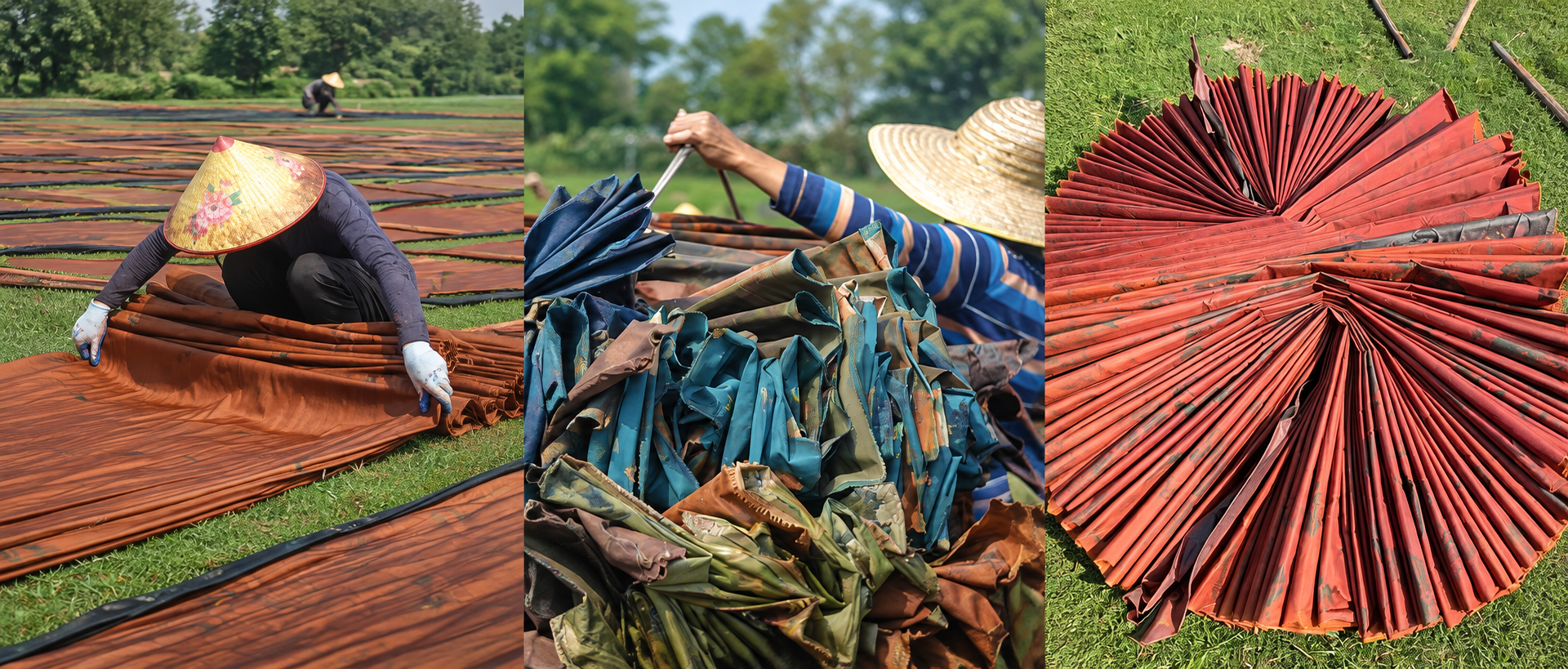
The outer pouch is made of silk gambiered gauze (xiangyunsha): 100% mulberry silk, dyed by a craft that China listed as National Intangible Cultural Heritage in 2008. The silk is dyed with the juice of the shuliang yam, dried in the sun, then coated with river mud from the Pearl River estuary. The cycle repeats, and gives the cloth its quiet sheen.
 No. 1Xiangyunsha silkNo. 2Quiet sheenNo. 3Petal pattern
 No. 1Cotton-linen clothNo. 2Soft foldNo. 3Botanical sprig print
Made slowly
Tradition sums the dyeing up as “three steamings, nine boilings, eighteen sun-dryings.” It is slow, open-air work, and learning it takes a dyer three to four years. Inside the silk we sew a mugwort-dyed cotton-linen lining, and inside that sits a thin, soft inner pouch of cotton-linen.
The ceramic jar
A ceramic jar, made to be kept
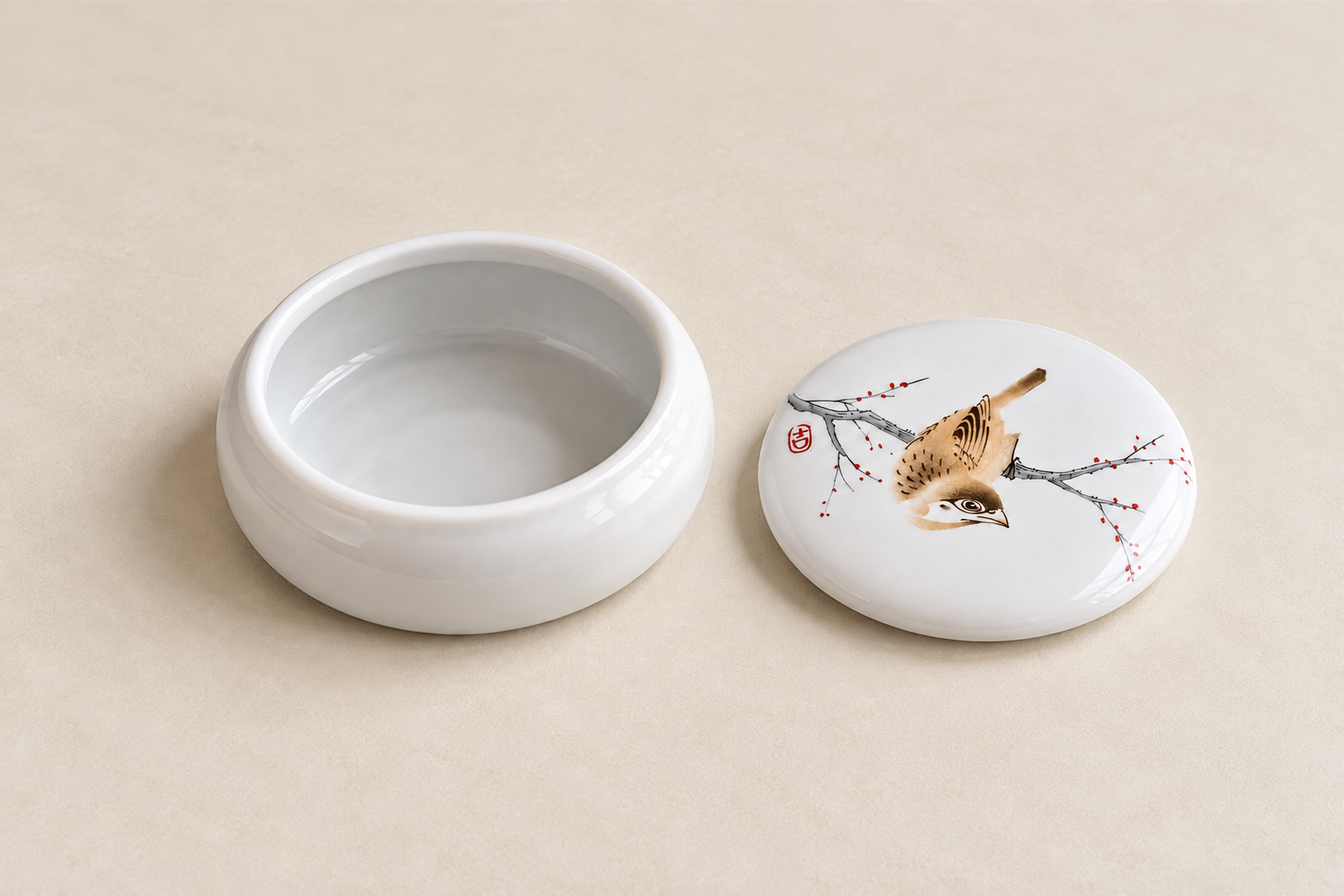
Bird on a blossoming branch
Rural Zhejiang · 2022
The pattern on our jar can be customized, so it can be a gift for someone in particular.
Incense pellets arrive in a ceramic jar. Once the pellets are finished, wash it and keep it: for small jewelry, little everyday things, or another scent.
Ceramic is a craft more than a thousand years old. Today a printed pattern on transfer film is applied to the glaze and fired on at high temperature, so the surface can carry far richer designs.