Scent as a small courtesy · Handmade in rural Zhejiang, China

You’re Not Really Looking for Non-Toxic Candles
What you really want is scent that doesn't have to burn: something that changes how a room smells and gives it the warm, settled feeling a candle used to.


As a small seller from China, I spend a lot of time browsing Amazon and Etsy, just seeing what people love and looking for ideas to bring back to my own work. Lately I kept running into the same search: non-toxic candles. It stopped me. Can a candle even be toxic? In my head, a candle was just a cotton wick and some plant oil.
What people are actually worried about
So I started reading product listings and buyer reviews. Most of the worry comes down to two things. One is the wax itself: paraffin and other petroleum-based waxes. The other is the heavy dose of synthetic fragrance.
Once you pull those two apart, the fix is pretty simple. If paraffin is what bothers you, an unscented plant-wax candle takes care of it. If it’s the fragrance, I think there’s a better way.
How scented candles get their scent
It’s hard to make a candle smell like anything without fragrance oil. Most scented candles on the market are made by stirring 6 to 10 percent fragrance oil into melted wax. Some makers use natural oils concentrated from plants instead, but that takes more time and money, and the scent comes out faint. The dried flowers on top are mostly there for looks. And however good the fragrance is, it still needs a flame burning the whole time to carry it into the room. That flame burns more than wax. It burns some of the fragrance too. Studies have found that scented candles usually give off more emissions than unscented ones, which is a big part of why people have started to worry.
A candle alternative that warms instead of burns
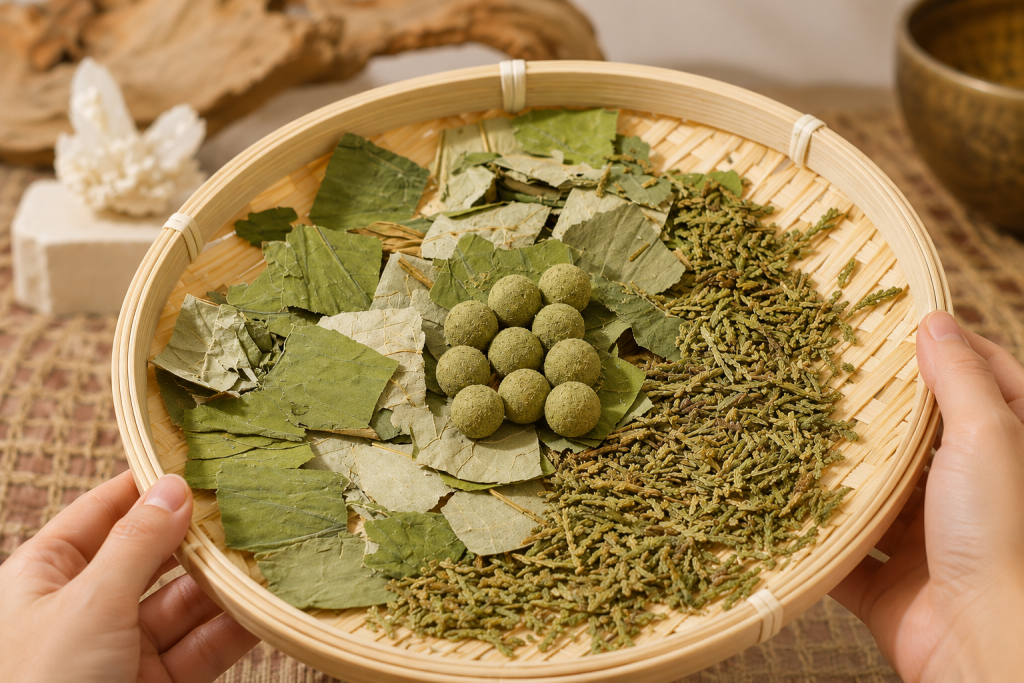
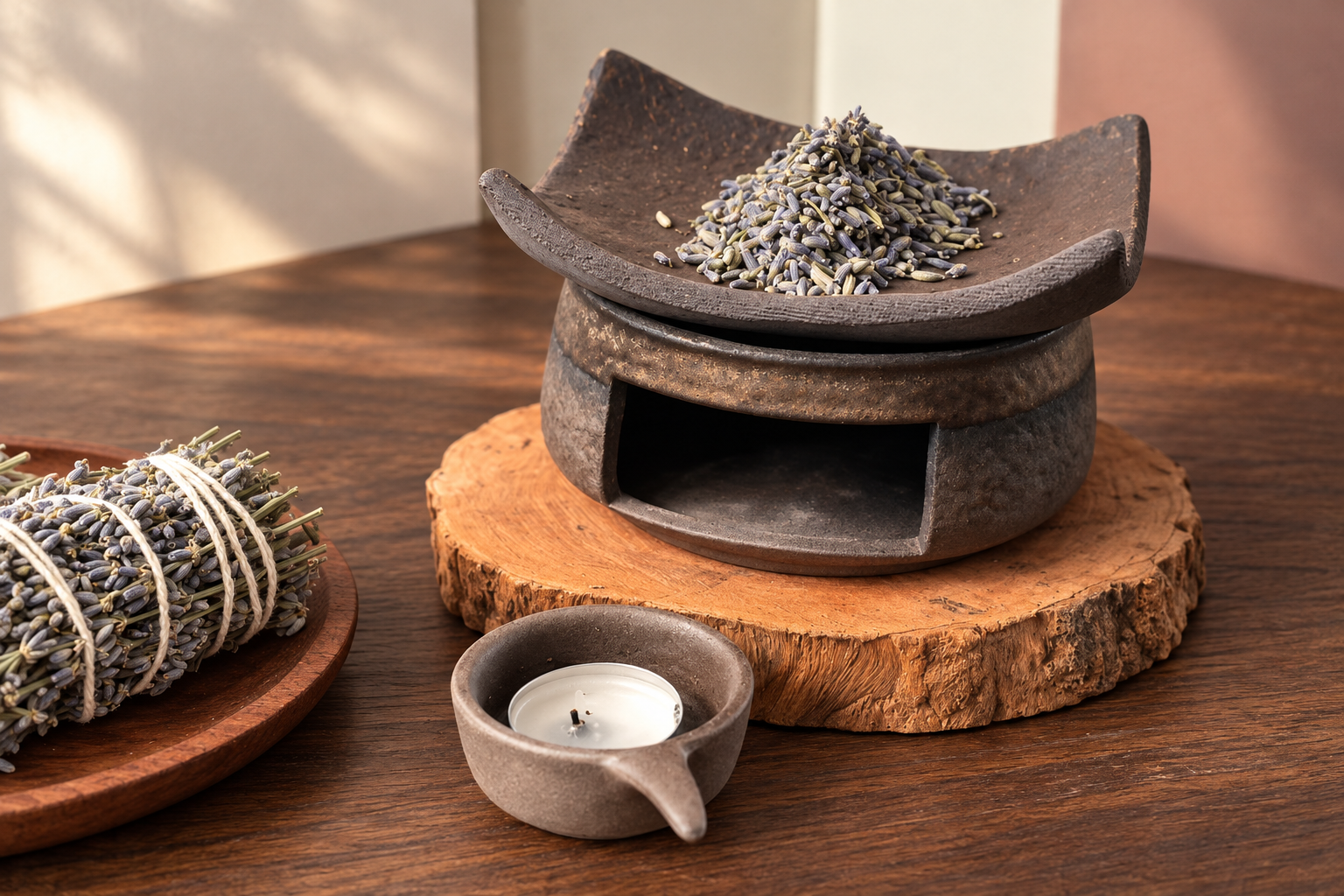
In traditional China, people scented a room by warming incense, not burning it. A piece of glowing charcoal was buried in a censer and covered with a layer of ash. The incense sat on the ash, warmed by the heat underneath, and never caught fire. The practice of kneading powdered aromatics with honey into small balls traveled to Japan with the Tang dynasty monk Jianzhen (Ganjin in Japanese), and there it’s still called neriko, or kneaded incense. Our incense pellets are made the same way: plants ground into a fine powder, kneaded with honey, and rolled into small beads by hand. You set them on a tealight incense burner, and the heat brings out the scent.
More on this tradition: Chinese Incense Is About Scent, Not Smoke.
Rose, honey, and nothing to burn
Say you love rose. We blend rose with a few supporting botanicals, knead it all with honey, and let it dry slowly in the shade. What you get smells like rose, with the soft sweetness of honey underneath. The layers stay distinct, and the scent lasts.
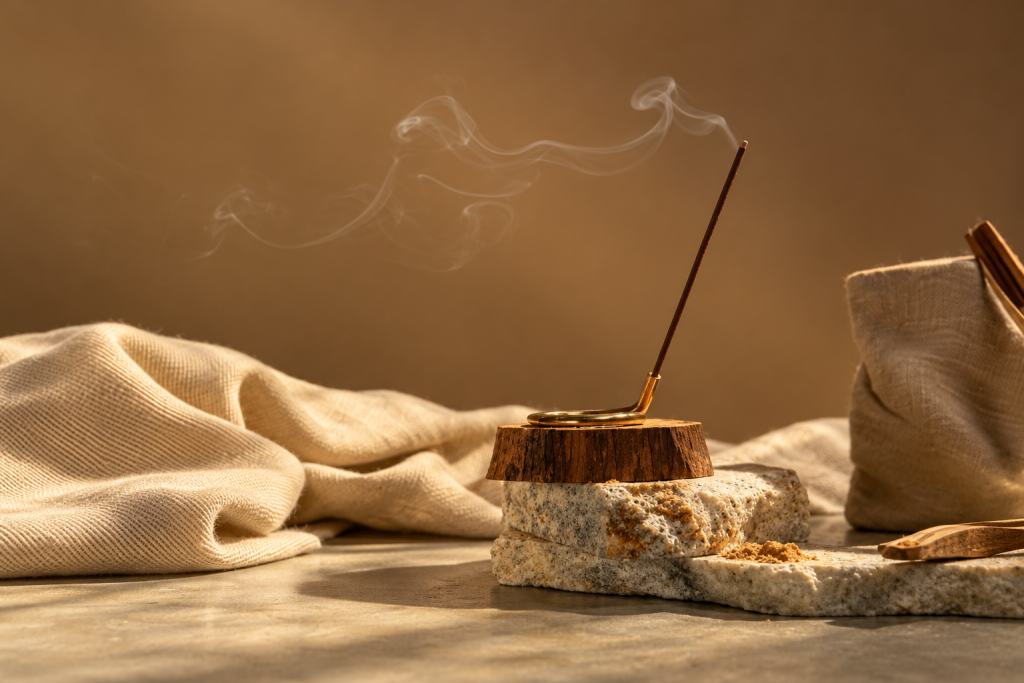
Because the pellets are warmed rather than lit, the material itself never burns, so there’s no smoke and no ash. For the heat source, we suggest an unscented plant-wax tealight. If you’ve been searching for non-toxic incense, you’re probably asking the same two questions people ask about candles: what’s in it, and what’s burning. Here, the pellets are plants and honey, and the only thing burning is the tealight.
There are electric incense burners now, too. They heat with electricity, let you set the temperature precisely, and don’t need an open flame.
Picture a weekend afternoon, the sun coming in low across the living room. You drop a small tealight into the burner, take one or two pellets from the porcelain jar, and set them on top. You make a cup of coffee and sit down next to someone you love. After about three minutes the rose comes up first, soft and sweet, then a little tartness from roselle and the mellow warmth of honey, slowly filling the room. The whole time, the pellets are only being warmed. No smoke, no ash. You talk, you read, or you do nothing at all, and the afternoon just goes by. Two or three hours later the scent fades, and like the afternoon, it ends on its own.
If you’d like to try it, take a look at our incense pellets.
FAQ
What makes a candle “toxic”?
Most of the worry comes down to two things: paraffin and other petroleum-based waxes, and heavy synthetic fragrance. If paraffin is the concern, an unscented plant-wax candle solves it.
Where does a scented candle’s scent come from?
Most scented candles mix 6 to 10 percent fragrance oil into the wax. The flame burns some of that fragrance too, and studies have found scented candles usually give off more emissions than unscented ones.
Is there an alternative that doesn’t burn the scent?
Yes. Incense pellets warmed on a tealight or electric burner release their scent without burning, so there’s no smoke and no ash.
What are incense pellets made of?
Plants ground into a fine powder, kneaded with honey, rolled by hand and dried in the shade. The method traveled to Japan with the Tang monk Jianzhen, where it’s still called neriko.
How long does the scent last?
It comes up after about three minutes and fades after two or three hours.

How to Make Incense Pellets: From Plant Powder to a Honey-Kneaded Pellet
How we make incense pellets by hand: 50-mesh powder, honey-kneaded dough, a rest, seven days of shade-drying. Made…
What Is Incense? What It Is Made Of, and How to Tell Good Incense
Incense is wood, resin and plants bound into a stick, cone or bead, or a blank stick dipped…
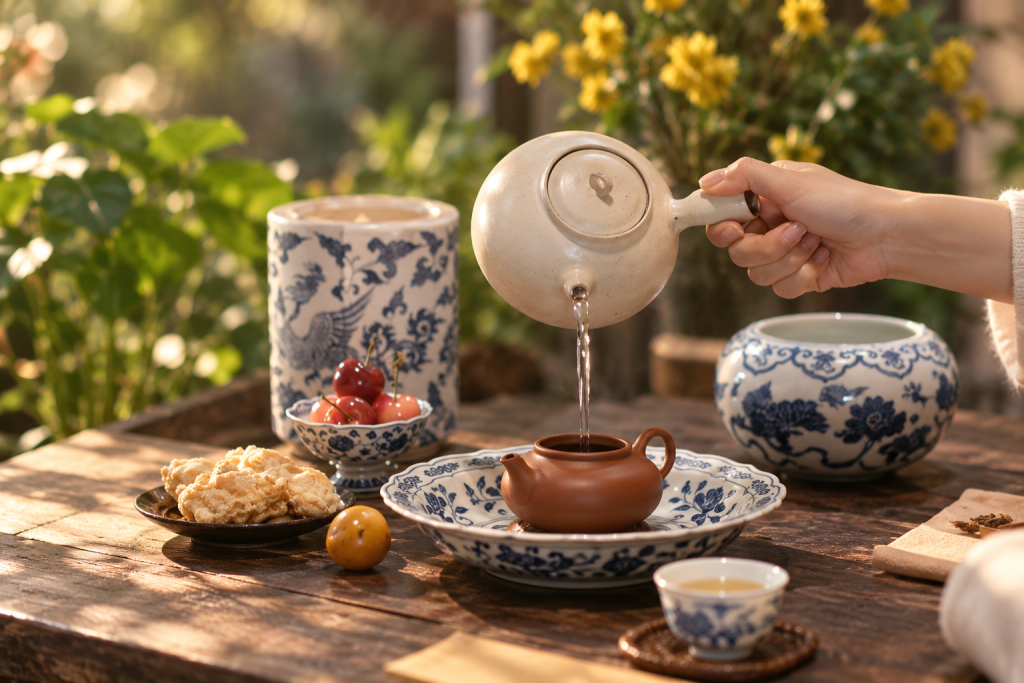
Chinese Tea Culture: Why Tea and Incense Belong Together
Where tea culture comes from, why tea and incense have shared a table since the Song dynasty, and…