Scent as a small courtesy · Handmade in rural Zhejiang, China

Chinese Tea Culture: Why Tea and Incense Belong Together
Where tea culture comes from, why tea and incense have shared a table since the Song dynasty, and how to host a tea gathering where scent never covers the tea.


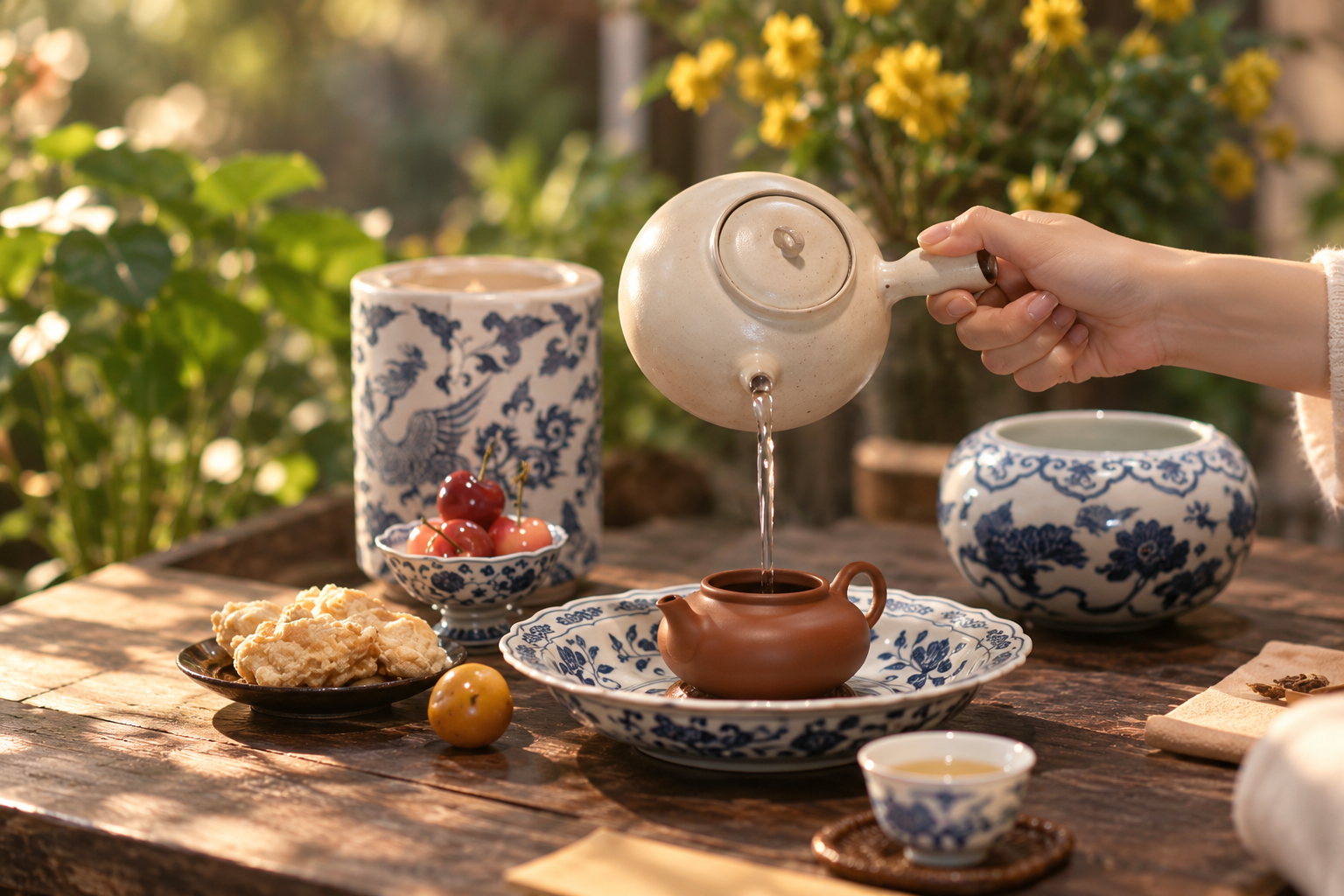
Tea spread from China to the rest of the world, and over thousands of years each country built its own tea culture. However it changes, tea culture is about people and tea: how they gather, how they brew, how they share a pot. In China, that has always included incense, and many people today have forgotten it. Our way is to warm a suitable incense while we drink, keep it an arm’s length from the cups, and let the scent fill the room around the tea.
This guide covers where tea culture comes from, why tea and incense go together, when incense comes in at a tea gathering, and how to set up a tea corner at home.
In one sentence: tea culture is the way of hosting, spending time together and living day to day that grew up around drinking tea, and in China incense has always been part of it.
Where Tea Culture Comes From
The tea plant first grew in southwest China, in the mountains where Yunnan and Sichuan meet northern Myanmar. People boiled the leaves as medicine long before they drank tea for pleasure. The man who turned tea drinking into a subject of study was Lu Yu, in the Tang dynasty. Around 760 he finished The Classic of Tea, which runs from growing and picking tea to the tools and the water for brewing it. It is the first book in the world written only about tea. After it, tea was more than a way to quench thirst. It became a way of living, with its own rules, its own objects and its own sense of beauty.
One thing about these customs stands out. Where people drank tea, there was usually incense too.
Tea and Incense Shared the Table in the Song Dynasty
In the Southern Song, Wu Zimu described daily life in Hangzhou in his Mengliang Lu. He listed burning incense, whisking tea, hanging paintings and arranging flowers as the four quiet pastimes of daily life. Incense and tea come first, side by side. For people in the Song, both were small, respectable parts of a day. Nobody called them work, and nobody went without them.
Tea and incense make a pair because they ask for the same thing: slow down and smell. You smell good tea before you drink it, and gongfu tea even has a tall aroma cup made only for smelling. Incense works the same way. Good incense is not strong. You notice it when you lean in. At a tea table, the tea is for the mouth and the incense is for the nose, and both pull your attention back to where you are.
One more point. In the Song, people enjoyed incense by setting it over charcoal under a layer of ash and warming it. They did not set it alight. The incense stick most people know today appeared in the Song and spread in the Ming, and it was first used for offerings and for keeping time (more in Chinese Incense Is About Scent, Not Smoke). The incense that shared a table with tea was warmed, and it did not smoke.
- Song dynasty: incense, tea, painting and flowers were called the four quiet pastimes, part of ordinary city life.
- Today: a tea gathering can still run this way. Incense comes first, then tea, and the incense steps back to keep it company.
How to Host a Tea Gathering, and Why Incense Belongs There
Any tea gathering needs incense, whether it is a few friends spending an afternoon at home or a formal tasting. Incense settles the room before guests arrive. It steps back once the tea starts, and it leaves the last trace of scent when everyone goes home. The tea is the host. The incense is a guest.
For a gathering of about two hours, you can plan the incense like this, so the scent in the room builds in layers:
| Stage | What happens | Where the incense is |
|---|---|---|
| Before guests arrive | Lay the tea table, boil the water | Start warming one or two pellets 5 to 10 minutes ahead, so the room has a base note |
| Welcome and seating | Greetings, a first look at the tea | Leave the incense where it is and add nothing |
| Warming the cups, waking the tea | The first smell of the dry leaves and the brew | This is when the tea’s aroma matters most. Keep incense away from the table |
| The first steep and the ones after | Drinking and talking | Incense stays in the background. If it gets strong, move the burner away or lower the heat |
| Changing teas, taking a break | A new tea, people stand and stretch | Add a fresh pellet, or invite guests to lean in and smell the burner |
| Saying goodbye | Clearing cups, seeing guests out | Let the incense run to the end. It is the scent your guests take home |
Scent That Competes With Tea, and Scent That Gives Way
When you choose incense for a tea gathering, ask one question: will it cover the tea? Anything with smoke, anything with a strong smell and anything too close to the cups competes with the tea. Scent with no smoke, a steady smell and some distance from the table gives way to it.
| Type of scent | Smoke or flame | Does it reach the tea? |
|---|---|---|
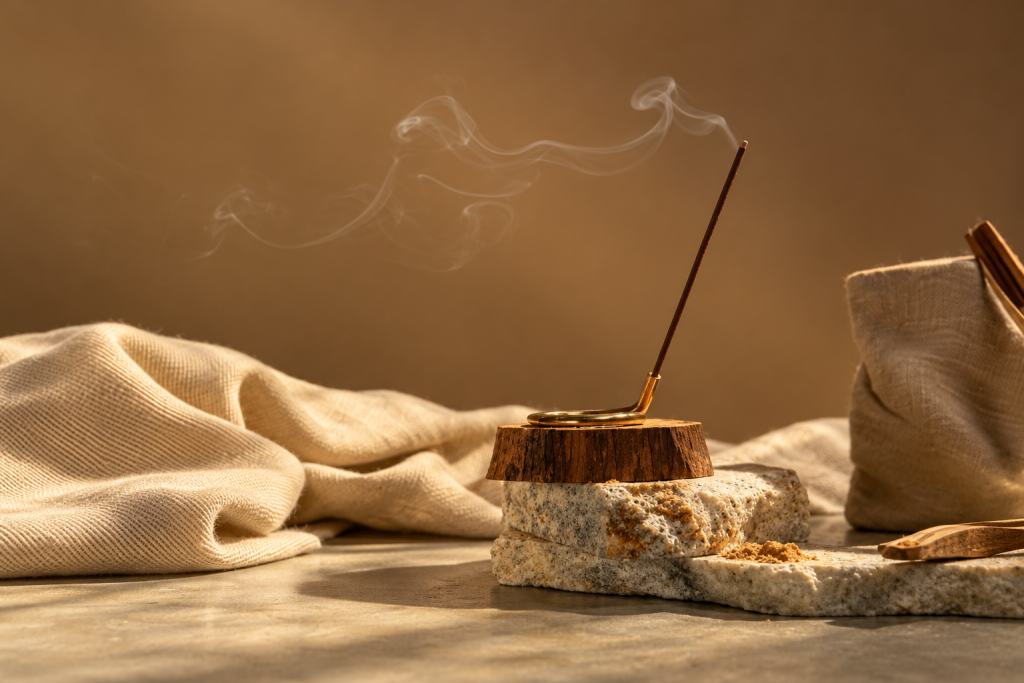
| Incense sticks and cones | Smoke and an open flame | Smoke drifts over the tea table and its smell overpowers the tea |
| Scented candles | An open flame | Candle fragrance tends to be sweet and clashes with the tea |
| Essential oil diffusers | No smoke | The mist carries concentrated oil and covers the tea when it sits near the cups |
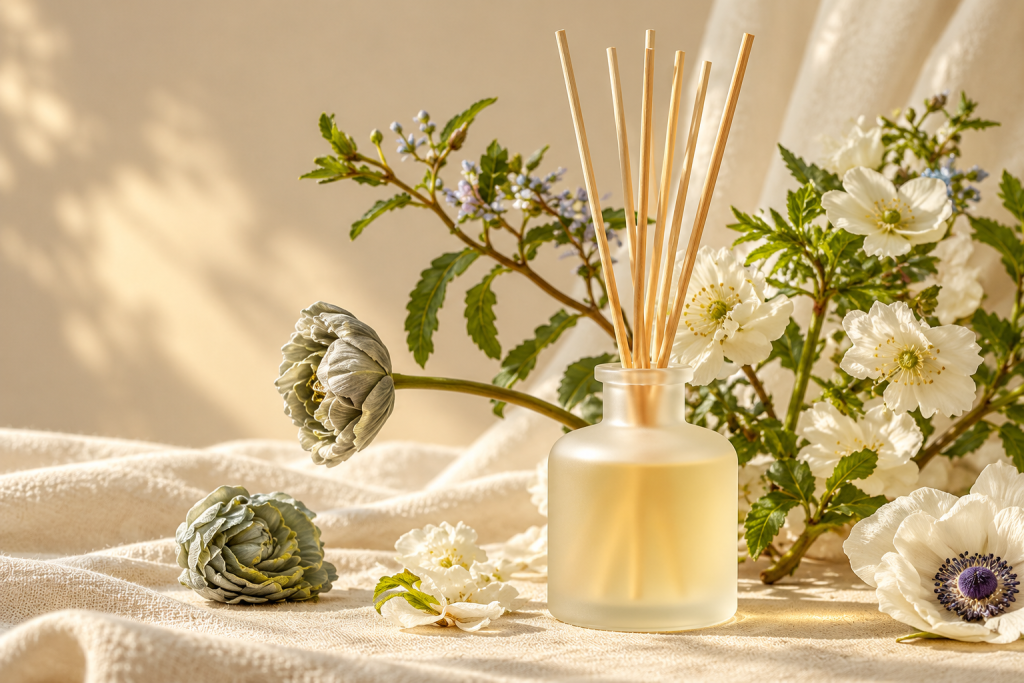
| Reed diffusers | No smoke | They release scent all the time, and you cannot pause them |
| Heated incense pellets | No smoke. A tealight burner has a small flame, an electric one has none | Warmed scent stays close to the burner and does not rush across the tea table |
This comes from our own experience, not a lab test.
The tea should be the loudest thing on the table.
How to Set Up a Tea Corner at Home
You do not need a tea room. A small table is enough: a teapot, a few cups, a tea mat, a waste-water bowl and an incense burner. Put the burner by the host’s hand, in the corner farthest from the guests’ cups. The host can adjust it at any time, and guests smell a layer in the air rather than a cloud under their noses.
Start with woody scents. Sandalwood and agarwood smell steady and stay put, so they do not compete with the tea. Save floral scents for after the guests leave, or for an autumn pot of oolong. If you are not sure which family you like, read how to choose incense by scent first.
For the tea table we make Slow Heart · Heated, a sandalwood-led incense pellet and part of our smokeless incense. Warm it at 150°C / 300°F on a tealight or electric burner. The scent rises in about 3 minutes, with no smoke and no ash. An osmanthus pellet, Osmanthus Moon, is coming in autumn.
Once your tea corner is set up, you do not have to wait for guests. A pot of tea for one, with a pellet warming beside it, is a tea gathering too.
FAQ
Where did tea originate?
The tea plant comes from southwest China, around the area where Yunnan and Sichuan meet northern Myanmar. People there first boiled the leaves as medicine. Tea later became an everyday drink and spread around the world.
What does tea symbolize in Chinese culture?
Tea stands for sincerity toward guests and an unhurried pace of life. Pouring tea for a guest shows respect, and drinking a pot slowly on your own is time kept for yourself. That is why the Song counted whisking tea and burning incense among the four quiet pastimes.
What are the rules of Chinese tea culture?
The most common ones: pour for guests first, fill each cup about 70 percent, and let elders and guests drink first. In southern China, when someone pours for you, tap two fingers lightly on the table to say thank you. At a formal gathering, add no incense and wear no perfume while people are smelling the tea, so its aroma comes through first.
Why do Chinese people burn incense?
There are two traditions. One is offering, in temples and at home, where incense shows respect. The other is the scholar’s enjoyment of incense as a daily pleasure, alongside tea, painting and flowers. In the second tradition, incense is usually warmed rather than set alight.
How do you set up a tea table?
A side table, a tea mat, a teapot, a few cups and a waste-water bowl are enough. If you use incense, put the burner by the host’s hand, in the corner farthest from the guests’ cups, and choose heated incense that does not smoke.

How to Make Incense Pellets: From Plant Powder to a Honey-Kneaded Pellet
How we make incense pellets by hand: 50-mesh powder, honey-kneaded dough, a rest, seven days of shade-drying. Made…
What Is Incense? What It Is Made Of, and How to Tell Good Incense
Incense is wood, resin and plants bound into a stick, cone or bead, or a blank stick dipped…
How to Choose the Best Incense by Scent: Start With Where You Will Use It
Best incense depends on where you use it. The five scent families, then how to choose for your…
The scent behind this story
Osmanthus Moon · Heated
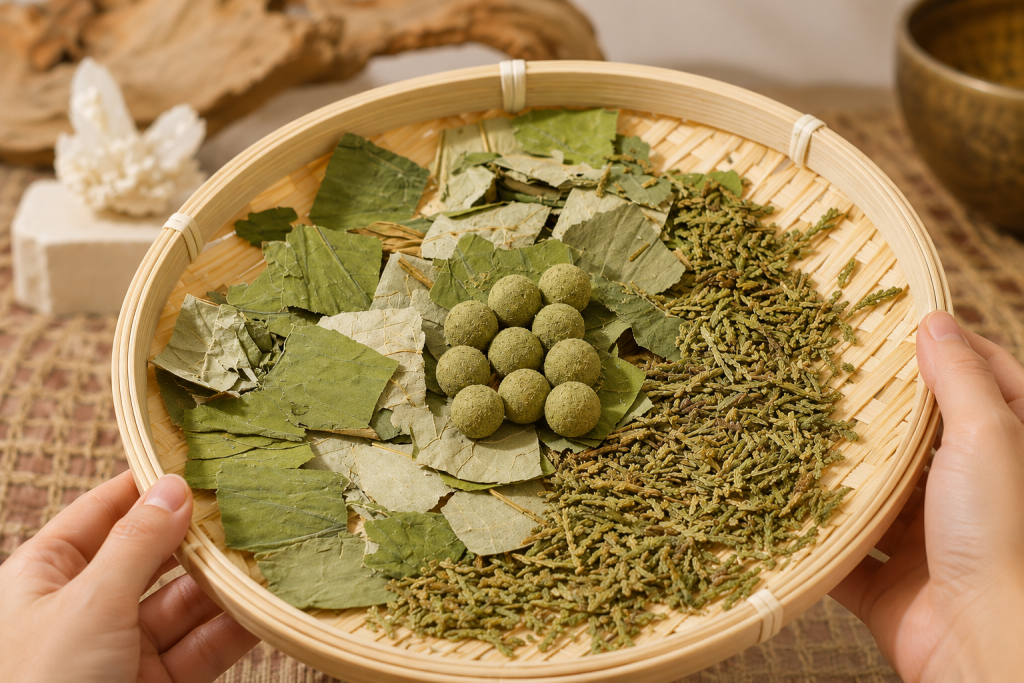
Honeyed osmanthus at the front, a touch of rose and clove, sandalwood and agarwood underneath: 35 hand-rolled osmanthus incense pellets in a white porcelain jar, each rolled in ground osmanthus. Heated at 150°C / 300°F, never burned, so no smoke and no ash. Our pick for autumn evenings at home. An incense burner is not included. Heat the pellets on a burner at 150°C / 300°F and never place them directly into a flame. How to use is below.
$68.00
View product →