Scent as a small courtesy · Handmade in rural Zhejiang, China

Sandalwood: What It Smells Like and How to Use Its Powder and Incense
Woods
Sandalwood is the scented heartwood of Santalum trees. It smells soft, creamy and warm, and the scent stays with you for hours. In India and China it has long had two jobs. It is used in rituals, and it appears in the old herbal medicine books.
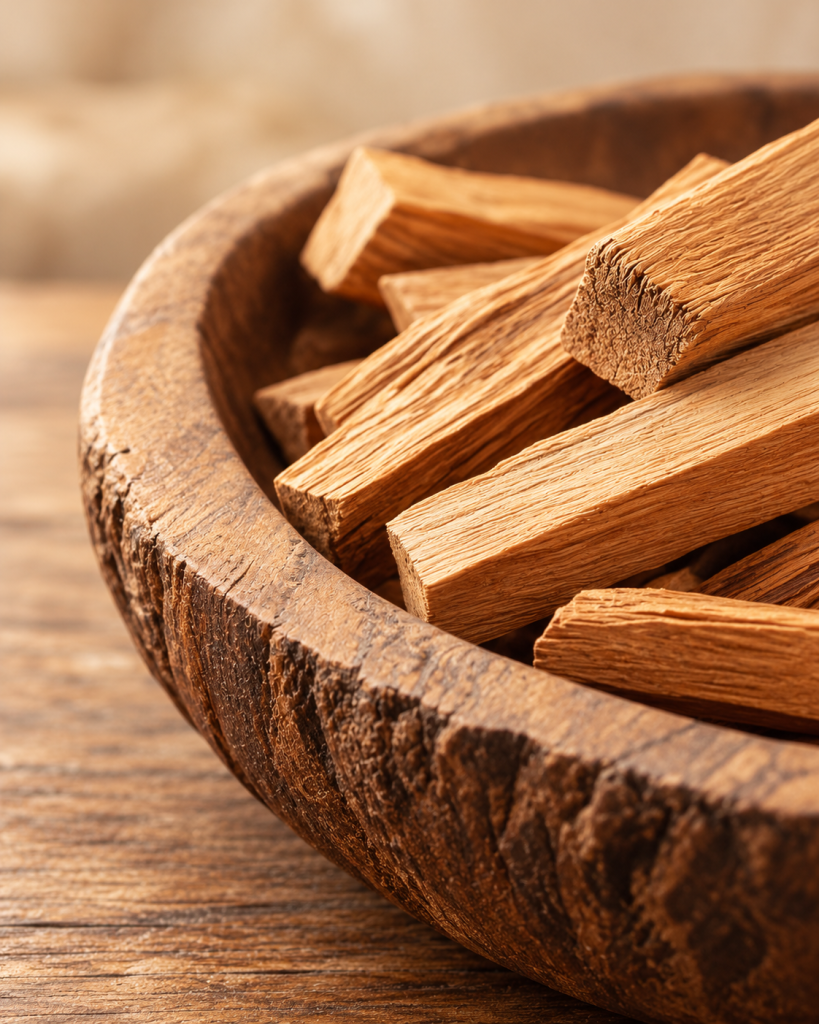
| Also known as | Chandan (from Sanskrit chandana), white sandalwood, 檀香 (tánxiāng) |
| What it is | The heartwood of Santalum trees. The main kinds are Indian, Australian, New Caledonian and Fijian sandalwood |
| Scent | Soft, creamy, warm, long-lasting |
| Key compounds | α-santalol and β-santalol, about 90% of the oil’s sesquiterpenes |
| Grown in | India (native), Australia, New Caledonia, Fiji |
| Common forms | Chips, powder, essential oil, incense |
| Protection | Not listed under CITES. Indian sandalwood is on the EU’s Annex D monitoring list |
What is sandalwood?
Sandalwood is the dense, oil-rich wood at the center of a mature sandalwood tree. Only this heartwood smells. The pale outer wood has almost no scent, so a tree must grow for many years before it is worth cutting. Sandalwood oil is usually steam-distilled from the heartwood.
Sandalwood comes in several kinds, told apart by color: yellow, white and purple. In China it has been widely used for centuries.
What does sandalwood smell like?
Soft, creamy and warm. It is a smooth woody note that stays close to the skin and lasts. Most of that smell comes from one molecule, α-santalol. The shape of a single double bond in it decides much of the classic sandalwood character.
Its scent is clear and strong, and it spreads fast. Burn it, and it covers every other scent around it.
Does sandalwood smell without heat?
Yes. At room temperature it gives off a faint, milky sweetness, which is why it works in sachets and beads. For the full scent you need warmth or fire. Heated, the milky note turns rich and spreads fast.
How do you use sandalwood?
Sandalwood smells without heat, so you can use it cold or warm.
| Way | How | Good for |
|---|---|---|
| In a sachet | Powder or chips in a cloth pouch | A drawer, a bag, or carried with you |
| As beads | Powder rolled into beads and worn on the wrist | Scent all day, no heat |
| Gently heated | Chips or pellets on a warmer, never lit | A fuller scent with very little smoke |
| As incense | Sticks, cones or pellets, burned | A room, meditation, ritual |
| As essential oil | Diluted in a diffuser or a carrier oil | Perfume, skincare |
How is sandalwood different from other materials?
Three comparisons come up most: the varieties of sandalwood itself, a material that plays a similar role, and a wood with a confusingly similar name.
Varieties: Indian vs Australian sandalwood
| Indian | Australian | |
|---|---|---|
| Botanical name | Santalum album | Santalum spicatum |
| Santalol in the oil | About 90% | Lower |
| Scent | Rich, creamy | More open, slightly smoky |
| Price | Highest | Lower |
Most Australian sandalwood oil falls short of the international standard for sandalwood oil. Its santalol is too low, and its farnesol, a possible allergen, is too high.
Similar role: sandalwood vs agarwood
| Sandalwood | Agarwood | |
|---|---|---|
| Comes from | Heartwood of Santalum trees | Resin that forms in wounded Aquilaria trees |
| Scent | Creamy, warm | Cool, sweet, distant. Sweeter when heated |
| Smells at room temperature | Yes | Faintly |
| CITES | Not listed | Appendix II |
The two are a classic pair in Chinese incense blends. Incense makers sum it up as tán qīng chén chén, “sandalwood is clear, agarwood is deep.” Sandalwood lifts a blend. Agarwood holds it down.
Often confused: red sandalwood is not sandalwood
Red sandalwood (Pterocarpus santalinus) is a different tree, used for furniture rather than for scent. It is listed under CITES Appendix II, while true sandalwood is not. Old Chinese books also mention a “purple sandalwood,” but they meant dark, aged sandalwood. The red timber sold under that name today is something else.
Why is sandalwood so expensive?
The heartwood takes many years to form, and wild Indian trees were overharvested. India once produced 180 to 200 tonnes of sandalwood oil a year. By 2004 it made about 70.
What are the benefits of sandalwood?
Sandalwood has been used as medicine for well over a thousand years. Modern research has only begun to test a few of those uses. Below, each claim says who made it.
What Chinese medicine says
Traditional Chinese medicine used sandalwood to bring down swelling and to kill parasites. Boiled into a drink, it was taken for pain in the chest and stomach. It was also used to drive out cold.
What Indian tradition says
In Ayurveda, India’s traditional medicine, sandalwood oil has been used for colds, urinary tract infections and digestive trouble. Sandalwood paste was spread on the skin to cool it, and as a beauty treatment. Its scent was said to calm the mind and lift the mood.
What modern research has found
| Claim | Evidence | What was found |
|---|---|---|
| Eases anxiety | Human study | 87 women about to have a breast biopsy wore a lavender and sandalwood aroma patch. They reported less anxiety than the placebo group. It was a blend, so the effect cannot be pinned on sandalwood alone. |
| Relaxes the body | Human study | Healthy volunteers had sandalwood oil put on their skin and wore masks so they could not smell it. α-santalol relaxed them physically. The whole oil relaxed the body too, yet people said they felt more alert. |
| Helps sleep | Lab or animal | Inhaling santalol at certain doses cut total waking time. |
| Calms inflammation | Lab or animal | Anti-inflammatory, antioxidant and antibacterial effects in lab tests. |
Sandalwood in history and culture
The name chandana
Its Chinese name 旃檀 (zhāntán) is a sound-for-sound borrowing of the Sanskrit chandana. In India, sandalwood paste is part of Hindu ritual, meditation and prayer.
One tree that sweetened a forest
A Buddhist parable tells of a hillside covered in foul-smelling plants. Their stench carried far. One young sandalwood tree grew among them, too small for anyone to notice. When it grew up, everyone smelled its fragrance, and the stench was gone for good.
How old incense makers used it
Incense makers in old China believed sandalwood lifts the other materials in a blend. That is why it so often sits at the base of Chinese incense recipes today.
Is sandalwood safe?
Based on current evidence, yes, in normal amounts. A few cases of skin irritation or allergy have been reported.
- Patch-test any essential oil on a small area first.
- Australian sandalwood oil contains more farnesol, a suspected allergen.
- Burning any incense adds fine particles to indoor air. Open a window, or pick a method that warms instead of burns.
Sandalwood at ZendoDream
Sandalwood is the woody base of our incense. This is what we notice working with it every day:
- At room temperature: a faint, milky sweetness.
- Heated: the milky note turns rich and spreads quickly.
- In the beads: it softens the whole strand and adds a milky warmth that most people like.
In China, incense makers describe sandalwood as a full sweetness from the first breath, and it carries far. Some people notice that an Indian sandalwood bracelet can smell like perfume. Part of that is its own milky sweetness. The rest is that it picks up scents from the wearer and the air around it.
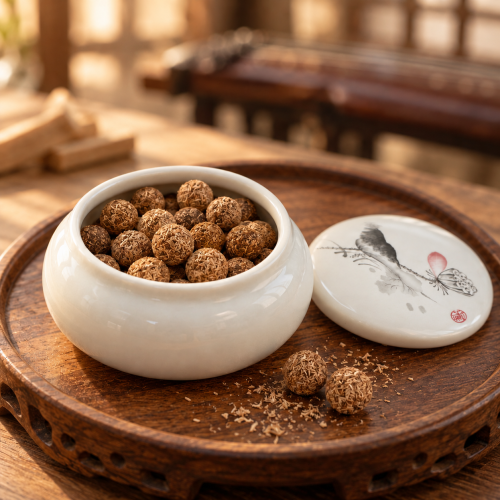
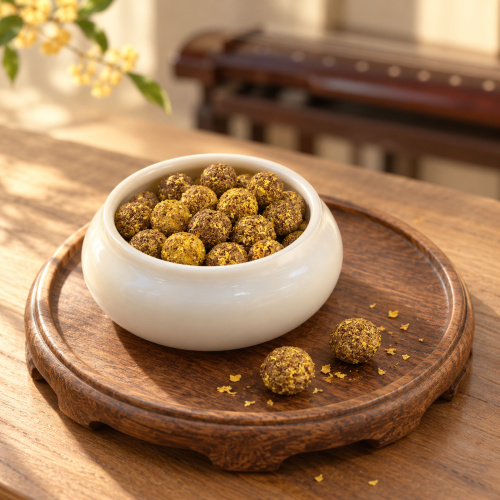
Sandalwood leads in Slow Heart · Heated: creamy sandalwood at the front, agarwood underneath, and 35 hand-rolled incense pellets, each rolled in fine sandalwood shavings.
Pieces made with sandalwood
-

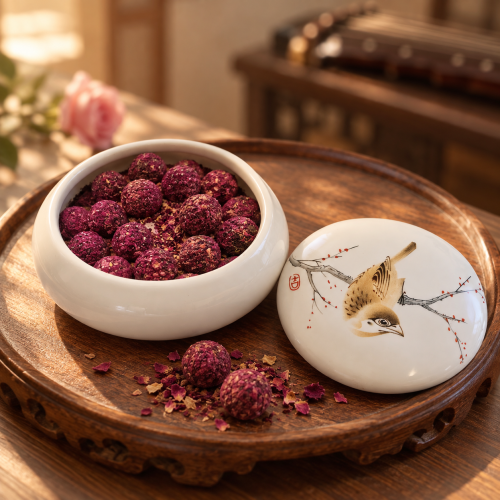
Singular Rose · Heated
$68.00 -
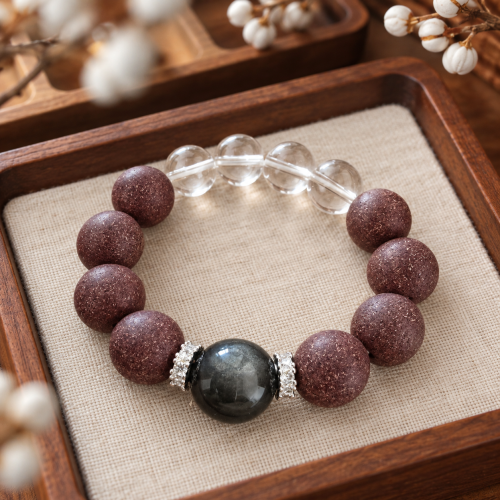
Singular Rose · Worn
Price range: $88.00 through $98.00Select options This product has multiple variants. The options may be chosen on the product page -
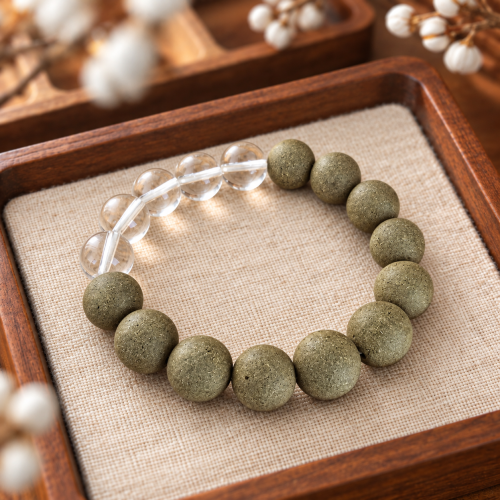
Green Hour · Worn
Price range: $88.00 through $98.00Select options This product has multiple variants. The options may be chosen on the product page -
Slow Heart · Heated
$68.00 -
Osmanthus Moon · Heated
$68.00
FAQ
What is sandalwood used for?
Incense, perfume and skincare, and for centuries as a medicine in Ayurveda and Chinese herbal books. Because it smells at room temperature, it also works in sachets and incense beads.
What does sandalwood smell like?
Soft, creamy and warm, a smooth woody scent that stays close and lasts for hours. Most of it comes from one compound, α-santalol.
Does sandalwood smell without burning it?
Yes. At room temperature it has a faint, milky sweetness. Gentle heat makes it much stronger, with very little smoke.
What are the benefits of sandalwood?
It has long been used to calm the mind and cool the skin. In one study of 87 women, a lavender and sandalwood aroma patch lowered anxiety before a biopsy. Most other evidence so far comes from lab and animal studies.
Why is sandalwood so expensive?
The scented heartwood takes many years to form, and wild Indian trees were overharvested. India’s sandalwood oil output fell from 180 to 200 tonnes a year to about 70 tonnes by 2004.
What is the difference between Indian and Australian sandalwood?
Indian sandalwood (Santalum album) has about 90% santalol in its oil and smells rich and creamy. Australian sandalwood (Santalum spicatum) has less santalol, smells more open and costs less.
Is red sandalwood the same as sandalwood?
No. Red sandalwood (Pterocarpus santalinus) is a different tree used for furniture, not scent. It is protected under CITES Appendix II. True sandalwood is not listed.
Is sandalwood incense safe?
Sandalwood itself has low toxicity, though a few people react to the oil on their skin. Any burning incense adds fine particles to indoor air, so keep the room ventilated or warm the sandalwood instead of burning it.
Sources
- Biological Properties of Sandalwood Oil, Biomolecules, 2024
- Re-discovering Sandalwood, Indian Journal of Dermatology, 2019
- CITES Species+: Santalum album and Pterocarpus santalinus
- Trambert et al., 2017, Hongratanaworakit et al., 2004, Burdock and Carabin, 2008
- Bencao Gangmu, Wood section, and Yu Lin, vol. 91, via Shidian Guji
This page is for general education. Health claims quoted from old texts and studies are not medical advice.