Scent as a small courtesy · Handmade in rural Zhejiang, China

Cloves: Their Benefits, the Oil and How the Spice Smells
Herbs & Leaves
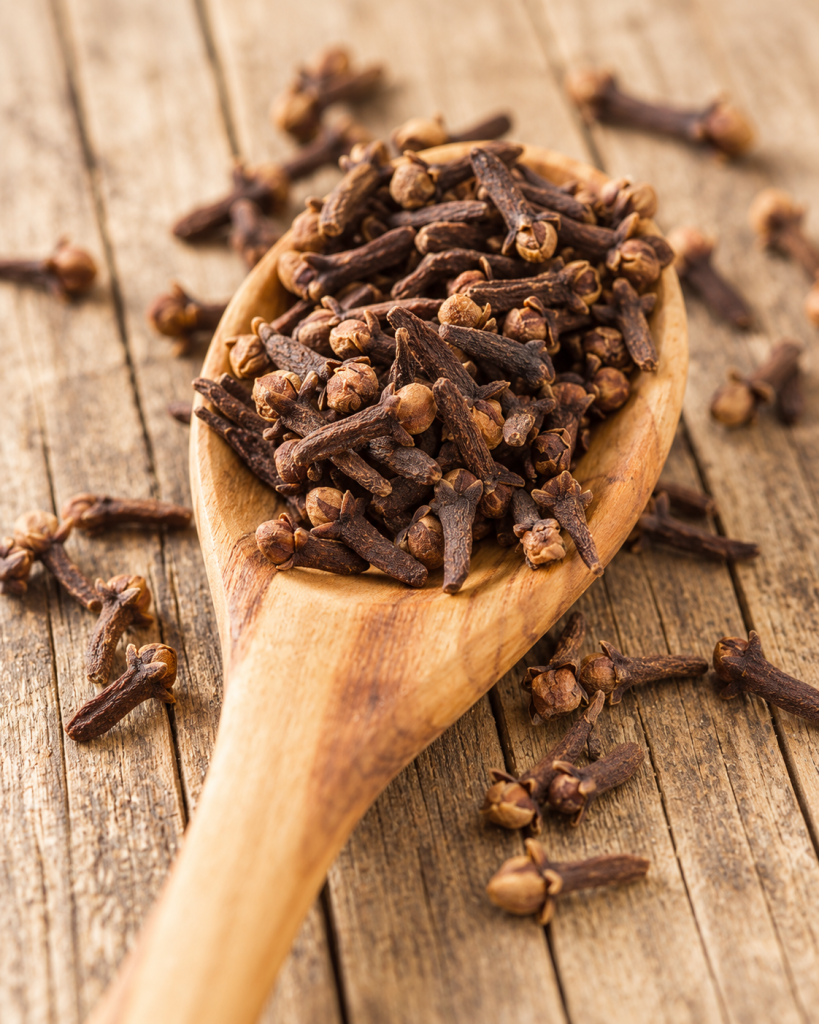
Cloves are the unopened flower buds of the clove tree, Syzygium aromaticum, dried until each looks like a small nail. The Chinese name dingxiang, “nail incense,” comes from that shape. They smell spicy, warm and piercing, and chewing one makes your tongue go slightly numb. Cloves come from the Maluku Islands of Indonesia and were once among the most expensive spices in the world. Today they sit in kitchen cupboards and in dental clinics.
| Also known as | Dingxiang (丁香) and jishexiang (“chicken tongue incense”) in the Bencao Gangmu. The larger ripe fruit is called mother clove |
| What it is | The unopened, dried flower bud of the clove tree, Syzygium aromaticum, in the myrtle family |
| Scent | Spicy, warm, piercing, slightly numbing. Strong even at room temperature |
| Key compounds | Eugenol, 72 to 90% of clove essential oil |
| Grown in | Native to the Maluku Islands. Indonesia grows the most today, followed by Madagascar, Tanzania (Zanzibar), Sri Lanka and Comoros |
| Common forms | Whole cloves, ground cloves, clove oil, clove tea |
| Protection | A cultivated crop, not listed under CITES |
What are cloves?
Clove buds are picked when they turn red, just before they open, and dried to a deep reddish-brown. Each one is about 1.5 to 2 cm long. The round top is the unopened flower, and the slim lower part is the base of the flower. Together they look like a nail.
Old Chinese descriptions say the same: the buds grow at the tips of the branches like small purple nails. The larger ripe fruit is called mother clove.
What do cloves smell like?
Spicy, warm and piercing, with a little sweetness underneath. Most of the smell comes from eugenol, which makes up 72 to 90% of clove oil. Eugenol also numbs locally, which is why your tongue tingles after you chew a clove.
Added to a blend, it leaves a pleasant scent on the body.
Do cloves smell without heat?
Yes, strongly. Whole cloves give off a sharp spicy scent at room temperature, and grinding or heating them makes it stronger. A blend only needs a little.
How do you use cloves?
| Way | How | Good for |
|---|---|---|
| As a spice | Whole or ground, in stews, marinades, mulled wine and pumpkin pie spice | The kitchen |
| As tea | A few whole cloves steeped in hot water | A warm drink |
| In blends | Ground and added in small amounts to incense, pellets or sachets | A touch of spicy warmth |
| As clove oil | Diluted and applied to the skin, and as eugenol in dental materials | Dental care, first aid |
How are cloves different from other materials?
Three comparisons come up most: clove buds and mother cloves, allspice, which smells a lot like clove, and the lilac, which shares its Chinese name.
Kinds: clove buds vs mother cloves
| Clove buds | Mother cloves | |
|---|---|---|
| What it is | The unopened flower bud | The ripe fruit |
| Size | Small, nail-shaped | Large, “the size of a cornelian cherry” |
| Common use | Almost all cloves sold today | Chinese medicine |
In old China, the large mother cloves were thought to be the best for medicine.
Similar material: cloves vs allspice
| Cloves | Allspice | |
|---|---|---|
| Comes from | Flower buds of the clove tree | Dried berries of Pimenta dioica |
| Scent | Spicy, piercing | Like clove, cinnamon and nutmeg together |
| Grown in | Indonesia and other tropical islands | Jamaica and Central America |
Both belong to the myrtle family and both contain eugenol, which is why allspice smells partly of clove.
Often confused: clove is not lilac
In Chinese, dingxiang also means the lilac (Syringa), a garden flower in the olive family. It has nothing to do with the spice.
Where do cloves come from?
Cloves once grew only on the Maluku Islands of Indonesia, the Spice Islands of European traders. In the 17th century the Dutch East India Company tried to control the whole clove trade. In 1770 French agents smuggled seedlings off the island of Ternate to Mauritius and the Seychelles, and the monopoly was broken.
Indonesia is still the largest producer today, but it exports only about 10 to 15% of its cloves. Most stay at home for clove cigarettes.
What are the benefits of cloves?
Cloves have been used as medicine for over a thousand years. In modern research the strongest evidence is for pain relief in the mouth. Below, each claim says who made it.
What Chinese medicine says
Traditional Chinese medicine used cloves to warm the stomach, stop vomiting and bring down swelling, and to freshen the breath. They also bring out the scent of other aromatics.
What modern research has found
| Claim | Evidence | What was found |
|---|---|---|
| Numbs pain in the mouth | Human study | 73 adult volunteers had clove gel put on their gums before a needle prick. They felt less pain than with a placebo, and about the same as with 20% benzocaine gel |
| Dental material | Traditional use | Clove oil has been used on decayed teeth since the 16th century. Zinc oxide eugenol is still used for temporary fillings and to soothe the tooth |
The US Food and Drug Administration has not approved clove for any medical use.
Cloves in history and culture
Syria, more than 3,700 years ago
Archaeologists found cloves in a burned house at Terqa in Syria, dated to about 1720 BC. Back then cloves grew only in the Maluku Islands, so they had already traveled halfway around the world.
A breath freshener in Han-dynasty China
Han-dynasty officials held a clove in their mouth before speaking to the emperor, so their breath would be fragrant and not offend.
Clove cigarettes in Indonesia
Indonesian kretek cigarettes are rolled from tobacco mixed with cloves. That is why Indonesia grows so many cloves and exports so few.
Are cloves safe?
Cloves in cooking and tea are safe. Concentrated clove oil is where you need care.
- Keep clove oil away from children. In one case report, a 15-month-old who swallowed about 10 mL developed acute liver failure. A poison center notes that 5 to 10 mL can cause serious poisoning in small children.
- Dilute clove oil and test it on a small patch of skin first. Do not spread it undiluted over large areas.
- People with liver disease or bleeding disorders should not take clove products by mouth.
Cloves at ZendoDream
At room temperature clove has a spicy edge. Heated, the scent spreads far, and on its own it is not that pleasant. In a blend it softens into the other notes, turns mellow and adds a sense of warmth. Incense makers in China agree on one thing: use very little. An old saying puts it like this. Agarwood sinks, sandalwood draws inward, and only clove rises, carrying the other scents up with it. Its value lies in using little. Too much, whether clove buds or mother cloves (the fruit), crowds out everything else.
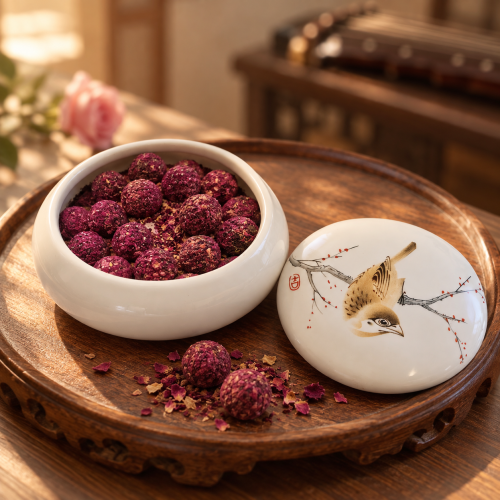
Clove is one of the woods and resins in Singular Rose · Heated: sweet rose at the front, a soft tartness from roselle, a faint milky warmth underneath. 35 hand-rolled rose incense pellets, heated at 150°C / 300°F and never burned.
Pieces made with clove
-

Singular Rose · Heated
$68.00 -
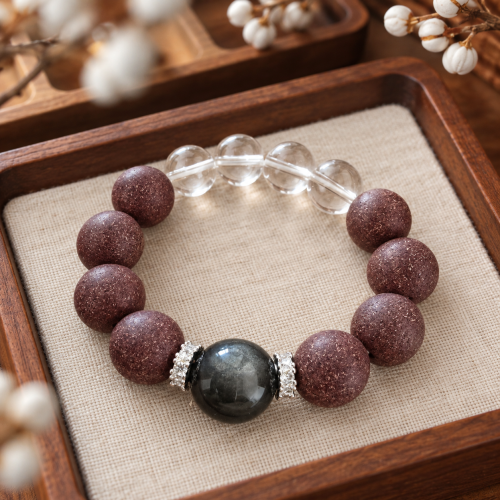
Singular Rose · Worn
Price range: $88.00 through $98.00Select options This product has multiple variants. The options may be chosen on the product page -
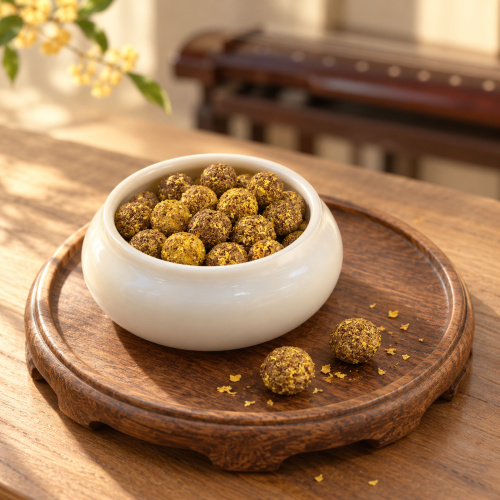
Osmanthus Moon · Heated
$68.00
FAQ
What is a clove?
A clove is the unopened flower bud of the clove tree, dried until it looks like a small nail. Cloves are native to the Maluku Islands of Indonesia.
What are cloves good for?
Cooking, tea, incense blends and dental care. Chinese herbal books used them to warm the stomach and treat bad breath.
What do cloves smell like?
Spicy, warm and piercing, with a little sweetness underneath. The smell comes mostly from eugenol.
Are cloves good for tooth pain?
There is some evidence. In a trial with 73 people, clove gel eased needle pain about as well as benzocaine gel. The FDA has not approved clove as a medicine, though, so see a dentist for toothache.
Is clove oil safe?
A little diluted oil on the skin is generally fine. Keep it away from children, because a few milliliters swallowed can seriously poison a small child.
What is the difference between cloves and allspice?
Cloves are flower buds of the clove tree. Allspice is the dried berry of a different tree. Both are in the myrtle family and both contain eugenol, so they smell alike.
What is clove tea?
A drink made by steeping a few whole cloves in hot water. It tastes warm and spicy.
Where do cloves come from?
They are native to the Maluku Islands of Indonesia. Today Indonesia grows the most, followed by Madagascar, Tanzania, Sri Lanka and Comoros.
Sources
- Clove, Wikipedia
- Alqareer et al., 2006, Journal of Dentistry
- Zinc oxide eugenol, Wikipedia
- Clove oil and liver failure in a child, European Journal of Pediatrics, 2005
- Tennessee Poison Center: the main toxic component of oil of cloves
- Allspice, Wikipedia
- Bencao Gangmu, Wood section, via Wikisource
This page is for general education. Health claims quoted from old texts and studies are not medical advice.