Scent as a small courtesy · Handmade in rural Zhejiang, China

Benzoin Resin: Its Vanilla Smell, Origins and Use in Tincture
Resins
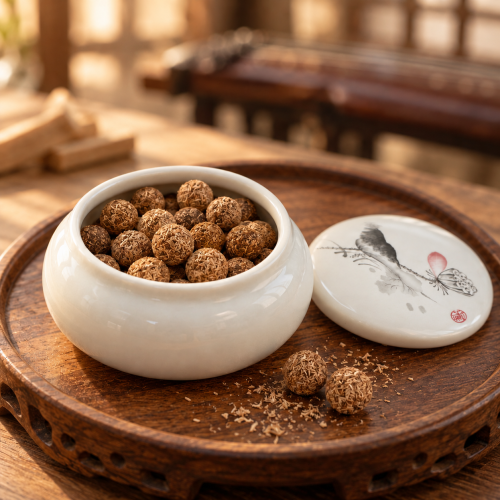
Benzoin resin is what seeps from Styrax trees when their bark is cut, then hardens. It smells warm and sweet like vanilla, with a soft milky note. It is used in incense blends, perfume and tincture, and is rarely burned on its own. Two names in chemistry, benzoic acid and benzene, come from it.
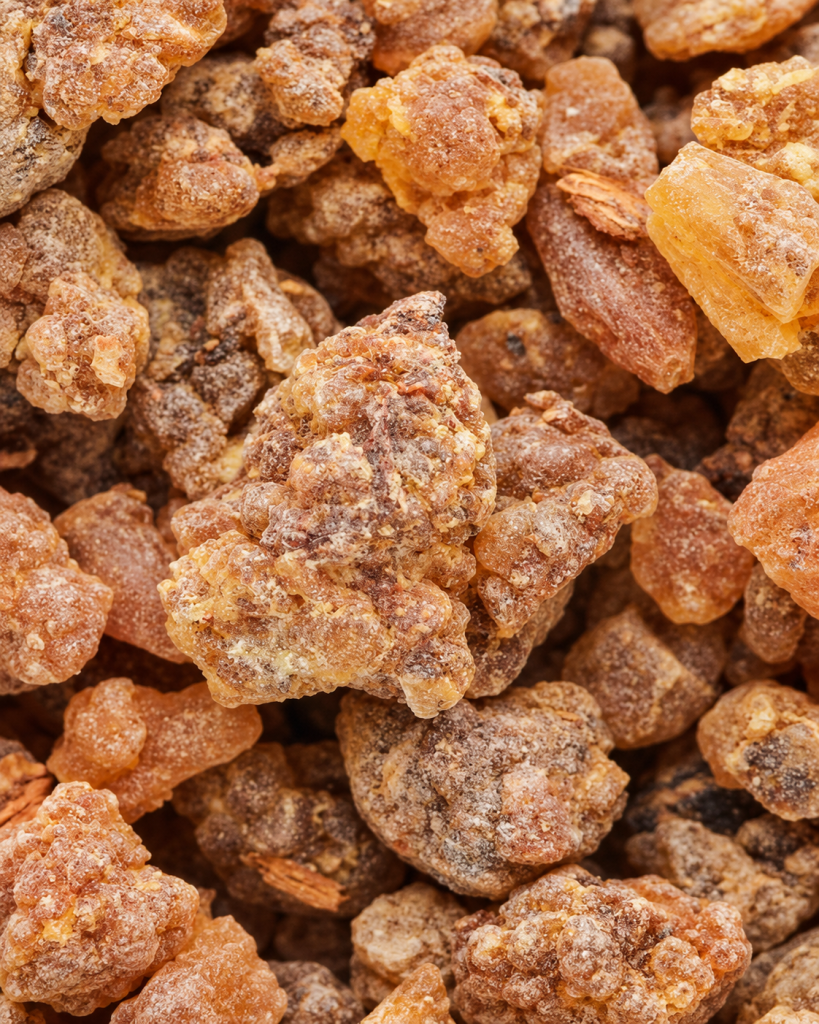
| Also known as | Anxixiang (安息香) in Chinese, gum benzoin, kemenyan in Indonesian |
| What it is | Resin of Styrax trees that seeps from cuts in the bark and hardens |
| Scent | Warm, vanilla-sweet, with a milky note. Faint at room temperature, it comes out when heated |
| Key compounds | Siam benzoin: benzoic acid and its esters, vanillin. Sumatra benzoin: cinnamic acid and its esters |
| Grown in | Laos (Siam benzoin), Sumatra in Indonesia |
| Common forms | Resin lumps, powder, an ingredient in incense blends, resinoid in perfume, compound benzoin tincture |
| Protection | Not listed under CITES |
What is benzoin?
Benzoin is resin a tree makes over a wound. In Laos, farmers grow benzoin trees on fallow land and start tapping them in the seventh or eighth year. They cut the bark from October to December, at the end of the rainy season, and collect the resin the next March and April. Each tree gives about 0.4 to 0.6 kg a year.
A Tang-dynasty account from more than a thousand years ago describes almost the same method: cut the bark, let the syrup-like gum run, and collect it once it hardens in summer.
What does benzoin smell like?
Warm and sweet, like vanilla, with a soft milky note and a balsamic depth. The vanilla comes from vanillin, the same molecule that gives vanilla beans their smell, and it is strongest in Siam benzoin.
Does benzoin smell without heat?
Not much. At room temperature you can barely smell it. Warm it and a faint milky, vanilla-like sweetness comes out. Old incense makers thought it was not worth burning alone. It works best in a blend, where it brings out the other scents.
How do you use benzoin?
| Way | How | Good for |
|---|---|---|
| In blends | Ground and mixed with other aromatics into sticks, pellets or beads | A warm sweetness under the whole blend |
| Gently heated | Lumps on an electric warmer, never lit | A fuller vanilla sweetness, little smoke |
| In perfume | Made into a resinoid | A warm base note |
| As a tincture | Compound benzoin tincture brushed onto the skin | Helps medical tape and dressings stick |
How is benzoin different from other materials?
Three comparisons come up most: the two kinds of benzoin, frankincense, which is also a resin, and a chemical that shares its name.
Kinds: Siam benzoin vs Sumatra benzoin
| Siam benzoin | Sumatra benzoin | |
|---|---|---|
| Botanical name | Styrax tonkinensis | Styrax benzoin, Styrax paralleloneurum |
| Grown in | Laos | Indonesia |
| Main compounds | Benzoic acid and its esters | Cinnamic acid and its esters |
| Scent | Sweeter, with the clearest vanilla | More balsamic |
Similar material: benzoin vs frankincense
| Benzoin | Frankincense | |
|---|---|---|
| Comes from | Resin of Styrax trees | Resin of Boswellia trees |
| Scent | Warm, vanilla-sweet | Crisp, pine, citrus |
| Grown in | Southeast Asia | Arabian Peninsula, Horn of Africa, India |
Often confused: the chemical benzoin and benzoin tincture
Chemistry also has a compound called benzoin. It is not a main component of this resin. The compound benzoin tincture sold in pharmacies is the resin dissolved in alcohol. It is not iodine or povidone-iodine.
Where does benzoin come from?
Production is concentrated in very few places. Laos is the main, perhaps the only, source of Siam benzoin, and it depends on traditional shifting cultivation. A plot used to rest for 10 to 12 years, long enough to tap the trees for four years or more. In some areas the fallow is now down to 4 or 5 years, and the trees are cleared before they are big enough to tap.
What are the benefits of benzoin?
Benzoin has been used as medicine since the Tang dynasty. Modern research so far is almost all in the lab. Below, each claim says who made it.
What Chinese medicine says
Traditional Chinese medicine used benzoin to clear foul air from the chest and abdomen, to warm the kidneys, and to ease dizziness in women after childbirth.
What modern research has found
| Claim | Evidence | What was found |
|---|---|---|
| Fights bacteria and inflammation | Lab or animal | A 2023 review found benzoin extracts and isolated compounds were antibacterial and anti-inflammatory in lab tests |
| Protects nerves | Lab or animal | The same review reported neuroprotective effects in the lab |
We found no human trials on the benefits of benzoin.
Benzoin in history and culture
Where the name anxi comes from
There are two stories behind the name. One says it wards off evil and puts the mind at rest, which is what anxi means. The other says Anxi was the name of an ancient country in western Asia. A Tang-dynasty account adds that the Persians called it the “tree that wards off evil.”
From “Javanese frankincense” to benzene
The English word benzoin comes from the Arabic lubān jāwī, “Javanese frankincense.” When it passed into European languages, the opening lu was taken for an article and dropped, giving French benjoin. Chemists later got benzoic acid from the resin, a name in use by 1790. In 1833 the German chemist Eilhard Mitscherlich distilled benzoic acid and named the result benzene.
An odd test for fakes
A strange test for the real thing was passed around in the Ming dynasty: genuine benzoin, people said, draws rats when you burn it.
Is benzoin safe?
As an aromatic, we found no reports of toxicity at normal use. Allergic reactions are on record.
- Cases of allergic skin reactions have been reported after compound benzoin tincture was put directly on the skin.
- If you react to Peru balsam, storax or cinnamic acid, you may react to benzoin too.
- Benzoin is usually burned blended with other aromatics. The more you burn, the more smoke, so open a window in a small room.
Benzoin at ZendoDream
At room temperature benzoin barely comes through. Warmed, it gives a faint milky note. In a blend it rounds out the other notes and gives them more depth. Add a little benzoin to a recipe and the beads hold their scent longer and are less likely to mold as they dry. In a floral or herbal blend, a small pinch holds the finish in place. Benzoin is best not lit directly, since a flame only brings out a burnt smell. Grind it to powder and warm it on a burner instead. When you grind and sift it, you can tell good resin from poor right away. Pieces from different regions differ in shape, too, and some are clear amber.
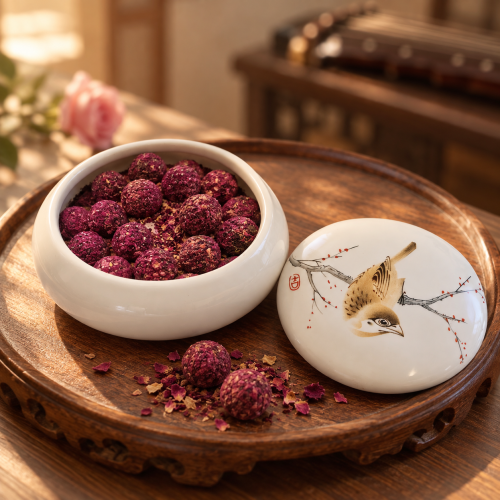
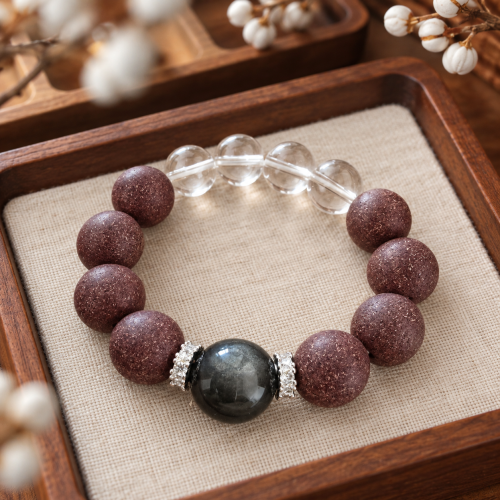
Benzoin is one of the woods and resins behind Singular Rose · Worn, a rose-led bracelet: Mohong rose, Pingyin rose and roselle carry it, backed by woods and resins, for a creamy, full aroma.
Pieces made with benzoin
-

Singular Rose · Heated
$68.00 -
Singular Rose · Worn
Price range: $88.00 through $98.00Select options This product has multiple variants. The options may be chosen on the product page -
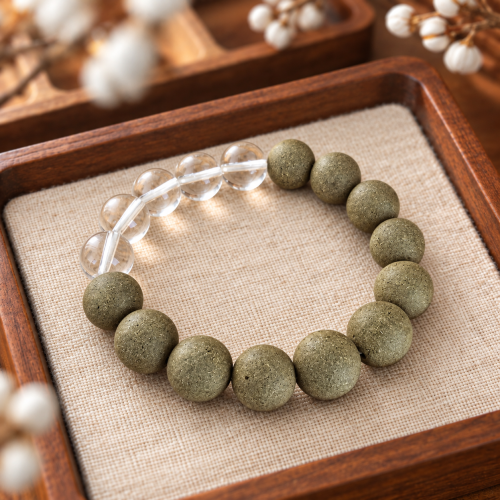
Green Hour · Worn
Price range: $88.00 through $98.00Select options This product has multiple variants. The options may be chosen on the product page -
Slow Heart · Heated
$68.00
FAQ
What is benzoin?
The resin that seeps from cuts in the bark of Styrax trees and hardens. Most of it comes from Laos (Siam benzoin) and Sumatra in Indonesia.
What does benzoin smell like?
Warm and sweet like vanilla, with a soft milky note. The vanilla comes from vanillin and is strongest in Siam benzoin.
What is benzoin resin used for?
Mostly in incense blends and perfume, where a resinoid gives a warm, vanilla-like base. Dissolved in alcohol, it becomes compound benzoin tincture, which helps medical tape stick.
What is benzoin tincture used for?
Compound benzoin tincture is the resin dissolved in alcohol. It is brushed onto the skin to help medical tape and dressings stick. A few people are allergic to it.
Is benzoin tincture the same as iodine?
No. Benzoin tincture is made from benzoin resin and contains no iodine.
What is the difference between Siam and Sumatra benzoin?
Siam benzoin comes from Laos. It is mostly benzoic acid and its esters, with a clearer vanilla note. Sumatra benzoin comes from Indonesia. It is mostly cinnamic acid and its esters, and smells more balsamic.
Is benzoin toxic?
As an aromatic, we found no reports of toxicity at normal use. The main risk is a skin allergy, usually from putting benzoin tincture directly on the skin.
Sources
- Gum benzoin, FAO Non-Wood Forest Products 6
- FAO, same volume: location and scale of production
- Benzoin Resin: An Overview, Plants, 2023
- Botanical Dermatology Database: Styrax
- BMC Dermatology, 2004, case report
- Etymology of benzoin, Wiktionary
- Etymology of benzoic, Etymonline
- Bencao Gangmu, Wood section, via Wikisource
This page is for general education. Health claims quoted from old texts and studies are not medical advice.