Scent as a small courtesy · Handmade in rural Zhejiang, China

Chinese Rosewood: The Fragrant Heartwood Burned as Jiangzhen Incense
Woods
Jiangzhen is a wood used in incense blends. It comes from Chinese rosewood, a tree found only in China. The scent is in the heart of the tree. Cut away the pale outer wood, and the red-purple heartwood inside is jiangzhen. On its own it is not very fragrant. Blended with other aromatics, it makes the whole scent fuller. The timber of the same tree is huanghuali, the prized wood of Ming and Qing furniture.
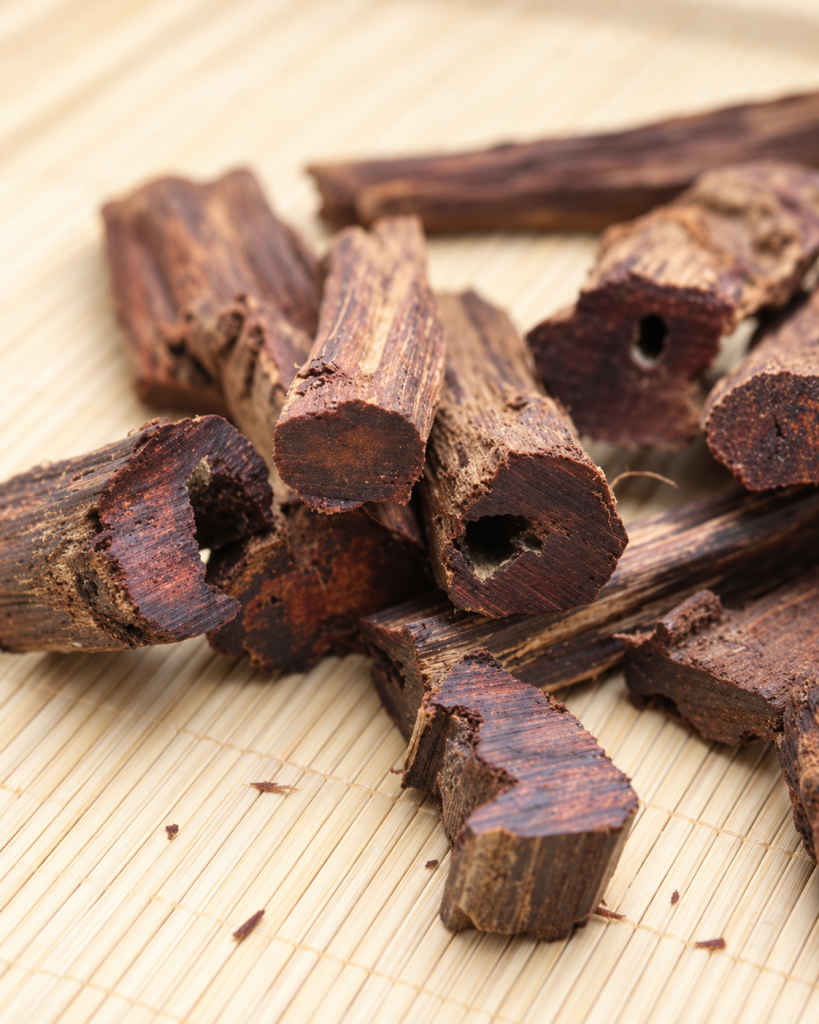
| Also known as | Chinese rosewood, fragrant rosewood, jiangxiang. Botanical name Dalbergia odorifera |
| What it is | The heartwood of Chinese rosewood, the dark wood at the center of the trunk |
| Scent | Faint on its own. Fuller and longer reaching in a blend |
| Key compounds | Nerolidol, about 27% of the steam-distilled oil |
| Grown in | Found only in China, mostly on Hainan, also in Fujian, Zhejiang and Guangdong |
| Uses | Incense blends, Chinese medicine, furniture |
| Protection | CITES Appendix II. Listed as vulnerable in 1998 |
What is jiangzhen?
Chinese rosewood is a tree in the pea family, 10 to 15 meters tall, that drops its leaves in winter. The outer wood of the trunk is pale. The heartwood at the center is red-purple. Jiangzhen is this heartwood. In Chinese medicine it is called jiangxiang.
In the past, the name jiangzhen may have been used for more than one tree, and people at the time could not always tell them apart. Today Chinese medicine and the market both treat Chinese rosewood as the real thing.
What does jiangzhen smell like?
Heated on its own, its scent is faint. Blended with sandalwood, agarwood or resins, it lifts the whole scent and helps it carry further. The main compound in its essential oil is nerolidol, about 27%.
How do you use jiangzhen?
| Way | How | Note |
|---|---|---|
| In blends | Ground and mixed with other aromatics for incense sticks, pellets and incense beads | Rarely used alone |
| In Chinese medicine | Traditionally used to clear blood stasis, move qi and ease pain | Follow a doctor’s advice |
| In furniture | The timber is huanghuali, a prized furniture wood of the Ming and Qing | Collectors |
How is jiangzhen different from other materials?
Jiangzhen vs agarwood
| Jiangzhen | Agarwood | |
|---|---|---|
| Comes from | Heartwood of Chinese rosewood, a legume | Wood of Aquilaria trees that builds up resin after injury |
| How you get it | Cut away the outer wood and take the heart | Wait for the tree to form resin |
| In a blend | Faint alone, comes alive in a blend | Strongly fragrant on its own |
Huanghuali and other rosewoods
After Chinese rosewood was cut too heavily, other Dalbergia woods began to stand in for it. The Chinese furniture trade uses the word rosewood for several different trees, so wood sold as huali or rosewood is not always this one.
Chinese rosewood vs rosewood
Rosewood is a name for a large group of hardwoods. Chinese rosewood and fragrant rosewood refer to Dalbergia odorifera alone.
Why is jiangzhen expensive?
Because the trees are nearly gone. Its timber was a main furniture wood in the Ming and Qing dynasties, and by the mid-Qing the supply on Hainan was largely used up. It was overharvested again in the 20th century and listed as vulnerable in 1998. By the early 21st century, most trees big enough for commercial use had been cut down.
What are the benefits of jiangzhen?
In traditional Chinese medicine, jiangxiang is used to clear blood stasis, move qi and ease pain. In the past its powder was also put on wounds to stop bleeding, and it was burned to clear the air in a house. Modern research is still at the lab and animal stage. We found no human trials.
| Claim | Evidence | What was found |
|---|---|---|
| Anti-inflammatory, chest pain, antioxidant | Lab or animal | A 2020 review: about 175 compounds identified. Flavonoids and the essential oil are thought to be the main active parts. How they work is still unclear |
| Heart muscle injury | Animal | In a pig model of reduced blood flow to the heart, salvia root combined with jiangxiang showed a protective effect |
| Antioxidant | Lab | Four compounds isolated from the root showed antioxidant activity |
The US Food and Drug Administration has not approved jiangxiang for any medical use.
Jiangzhen in history and culture
Where the name comes from
Jiangzhen means bringing down the immortals. In Daoist rites it was burned with other incense, and its smoke rose straight up. People believed it could call the immortals down, so it ranked first among incense for offerings.
Once shipped in by sea
In the Ming dynasty, some jiangzhen came from southern China and some arrived by ship from what are now Vietnam, Thailand and Brunei. The imported wood, purple and oily, was thought to be the best.
One tree, furniture and incense
In the late Ming and early Qing, huanghuali became the main wood for fine furniture. The timber went into furniture. The heart of the tree went into incense and medicine.
Is jiangzhen safe?
- A protected tree. The whole Dalbergia genus is listed in CITES Appendix II, Chinese rosewood included, with the current listing in force since 26 November 2019. International trade needs permits. The EU lists it in Annex B.
- Possible allergies. Dalbergia woods contain sensitizing quinones and are known for causing allergic reactions. People with sensitive skin should avoid long contact with the wood dust.
- Ask a doctor before using it as medicine, especially if you are pregnant, breastfeeding or taking medication. Do not try the old wound remedies yourself.
Jiangzhen at ZendoDream
Blended with other aromatics, it makes the scent linger longer and adds depth. Good jiangzhen holds several scents at once, and they only come out when it is warmed on a burner. The raw wood smells strongly spicy, with a clear coolness. So it is usually processed first. It is soaked in tea to take off its harshness and excess oil, simmered in wine, then cooked with candied dates for sweetness. Warmed after processing, it opens with a touch of coolness. Then floral, fruity and woody notes come through, softer and smoother than the raw wood.
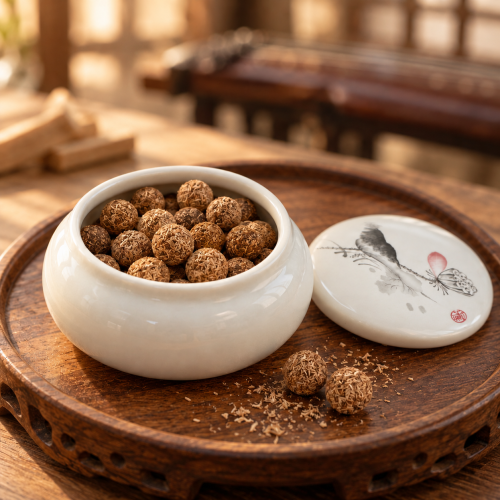
Jiangzhen is one of the woods in Slow Heart · Heated: creamy sandalwood at the front, the quiet depth of agarwood, a soft resin sweetness underneath. 35 hand-rolled sandalwood incense pellets, heated at 150°C / 300°F and never burned.
Pieces made with jiangzhen wood
-

Slow Heart · Heated
$68.00
FAQ
What is jiangzhen?
A fragrant wood used in incense. Today it mostly comes from the heartwood of Chinese rosewood, Dalbergia odorifera, a tree in the pea family. In Chinese medicine it is called jiangxiang. It is not very fragrant burned alone and comes alive in a blend.
Is jiangzhen the same as huanghuali?
They come from the same tree. The timber of Chinese rosewood is Hainan huanghuali, used for Ming-style furniture. Its heartwood, used as incense and medicine, is called jiangxiang or jiangzhen.
Why is it called jiangzhen?
Burned with other incense, its smoke rises straight up, and people believed it could bring the immortals down. Daoist rites for the stars ranked it first. Jiangzhen means bringing down the immortals.
Is Chinese rosewood endangered?
It was listed as vulnerable in 1998. The whole Dalbergia genus is in CITES Appendix II, and international trade needs permits.
Is Chinese rosewood the same as jiangzhen?
Chinese rosewood and fragrant rosewood are English names for Dalbergia odorifera, the tree jiangzhen comes from. Rosewood on its own is a name for a large group of hardwoods and does not always mean this tree.
Sources
- Dalbergia odorifera, Wikipedia
- Dalbergia, Wikipedia
- Dalbergia odorifera, Chinese Wikipedia
- CITES Species+: Dalbergia odorifera
- Zhao et al., 2020, Journal of Ethnopharmacology, review
- Song et al., 2011, Zhong Yao Cai, essential oil
- Pig heart study, International Journal of Molecular Medicine, 2018
- Bencao Gangmu, Wood section, via Wikisource
This page is for general education. Health claims from traditional use and studies are not medical advice.