Scent as a small courtesy · Handmade in rural Zhejiang, China

Lavender: What It Smells Like, English vs French, and Dried Lavender Uses
Flowers
Lavender is a flowering plant in the mint family, native to the Mediterranean. People mostly use its flowers. The dried buds go into sachets, tea and baking, and the oil distilled from them goes into perfume and skincare. It smells soft, sweet and floral, with a fresh herbal edge. The most common kind is English lavender.
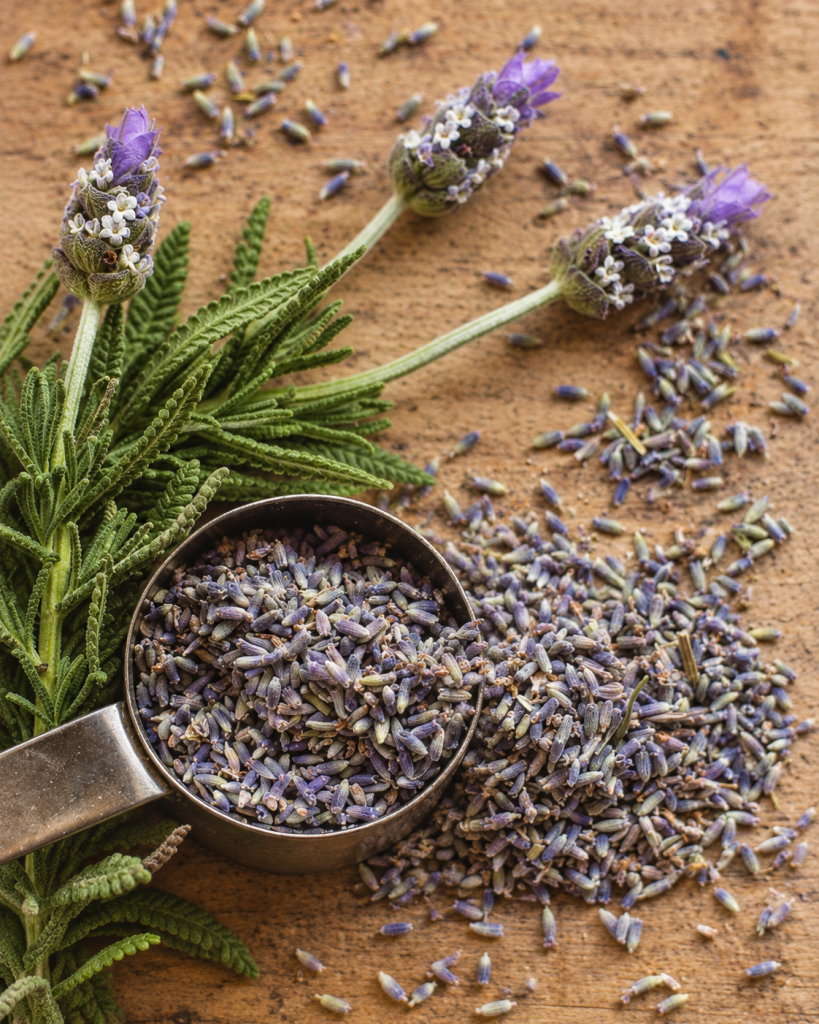
| Also known as | Lavandula. The most common kind is English lavender, Lavandula angustifolia |
| What it is | The flowers and buds of plants in the genus Lavandula, which has about 47 species |
| Scent | Soft, sweet and floral with an herbal edge. Dried buds smell at room temperature |
| Key compounds | Linalyl acetate, about 30 to 55% of the oil, and linalool, about 20 to 35% |
| Grown in | Native to the Mediterranean, east to the Middle East and India. Today most lavender oil comes from Bulgaria, France and China. In China it grows mainly in Xinjiang and Gansu |
| Common forms | Dried buds, essential oil, tea, sachets |
| Protection | A cultivated crop, not listed under CITES |
What is lavender?
The genus Lavandula has about 47 species, all perennial herbs or small shrubs. The flowers grow in rings on spikes that rise above the leaves. Wild species are mostly blue, violet or lilac. The fine hairs on the leaves hold essential oil. Commercial growers raise lavender mainly to distill that oil.
The English word lavender is generally thought to come from the Latin lavare, to wash, because people once used the flowers in bathwater.
What does lavender smell like?
Soft, sweet and floral, with an herbal edge. Most of the smell comes from two compounds in the oil: linalyl acetate, about 30 to 55%, and linalool, about 20 to 35%. Around 93 compounds have been found in the oil in all. Their balance varies a lot between species, so different lavenders smell different.
Does lavender smell without heat?
Yes. The buds get stronger as they dry, so they work at room temperature in a sachet. People tuck them into wardrobes to give clothes a fresh smell and to keep moths away.
How do you use lavender?
| Way | How | Good for |
|---|---|---|
| In a sachet | Dried buds in a cloth pouch | A wardrobe, a drawer, carried with you |
| In tea and baking | Dried buds steeped as tea, or added to desserts, sugar and drinks. Dried buds are stronger than fresh, so use about a third as much | The kitchen |
| As essential oil | Diluted for perfume, massage and diffusers | Perfume, skincare |
| As dried flowers | Spikes in dried bouquets and potpourri | The home |
| In blends | A little in incense beads or sachets adds a floral note to woods | Carried with you |
How is lavender different from other materials?
Kinds: English vs French lavender
| English lavender | French lavender | |
|---|---|---|
| Botanical name | Lavandula angustifolia | Usually Lavandula stoechas, sometimes Lavandula dentata |
| Looks | Slim flower spikes | A tuft of long purple bracts on top of each spike |
| Scent | Sweet | Sharper and more resinous, with camphor and fenchone |
| Cold | Fairly hardy | Does not like frost |
| Common use | Oil, cooking, sachets | Mostly ornamental |
These names are loose. English lavender is not native to England, and French and Spanish lavender can mean different species in different places.
Similar material: lavender vs lavandin
Lavandin is a hybrid of English lavender and spike lavender, Lavandula × intermedia. Its flowers are bigger, it is easier to harvest and it yields more oil, so it is the most widely grown lavender in the world. The oil is close to English lavender but has more camphor, which makes it sharper. Some see it as lower in quality. Much of the lavender grown in Provence and in the Ili valley of Xinjiang is this kind.
Where does lavender come from?
Lavender is native to the Mediterranean, from the Iberian Peninsula and the coast of North Africa east to the Middle East and India. Today the main producers of lavender oil are Bulgaria, France and China. The lavender fields of Provence are the best known. In China it grows mainly in the Ili valley of Xinjiang and in Gansu. Lavender oil is also one of the most often faked essential oils.
What are the benefits of lavender?
Germany’s Commission E, a panel that reviewed herbal medicines, recorded traditional uses of lavender flower for restlessness, trouble sleeping and stomach discomfort. There are many human trials, but their quality varies. Below, each claim says who made it.
| Claim | Evidence | What was found |
|---|---|---|
| Eases anxiety (by mouth) | Human study | A 2019 meta-analysis: 80 mg a day of lavender oil capsules (Silexan) for at least 6 weeks lowered anxiety scores (1,173 people). Germany has approved Silexan as a medicine for restlessness linked to anxiety |
| Eases anxiety (inhaled) | Human study | The same analysis: smelling lavender lowered anxiety scores (1,682 people). Most studies had a high risk of bias and very different designs, so the authors call this only an indication |
| Sleep | Human study | A 2025 meta-analysis of 11 randomized trials with 628 adults: lavender oil improved sleep quality. The number and quality of studies are limited |
The US Food and Drug Administration lists lavender as generally recognized as safe to eat, but has not approved it for any medical use.
Lavender in history and culture
A luxury in Roman times
In Roman times, a pound of lavender flowers sold for 100 denarii, about a month’s wages for a farm worker. Romans added lavender and other herbs to their bathwater.
Oil for wartime hospitals
During the First World War, lavender oil was used in hospitals.
Not always part of herbes de Provence
Lavender was not used in southern French cooking at the start of the 20th century. The herbes de Provence blend was invented by spice wholesalers in the 1970s, and lavender is added in the North American version.
Is lavender safe?
In food amounts it is considered safe. A few things to keep in mind:
- Pets. The ASPCA lists lavender as toxic to cats, dogs and horses. The toxic parts are linalool and linalyl acetate, which can cause nausea, vomiting and loss of appetite. Keep the oil and dried flowers where pets cannot reach them.
- Do not drink the oil. Most essential oils are poisonous if swallowed, and 2 to 3 mL can be toxic for a child. From 2014 to 2018, New South Wales in Australia recorded 271 cases of lavender oil poisoning, mostly in children.
- Skin. Some people get contact dermatitis. Dilute the oil and test it on a small patch of skin first.
- Boys and pregnancy. In 2007 the New England Journal of Medicine reported three young boys who developed breast growth after repeated use of products with lavender and tea tree oils. It went away after they stopped. The US National Center for Complementary and Integrative Health advises caution with lavender oil for boys, and does not recommend it during pregnancy or breastfeeding.
Lavender at ZendoDream
Whole or crushed, lavender is easy to recognize: soft, with a grassy edge. The scent clings to clothes easily. It is a matter of taste, though, and not everyone likes it. Incense makers in China mostly use it as a supporting floral note, to lighten the heaviness of woods and make a blend feel livelier. We use it the other way round.
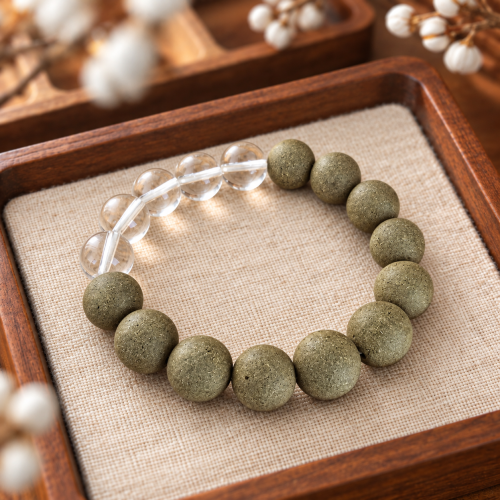
Lavender leads in Green Hour · Worn: sweet, floral lavender softened by agarwood, with a gentle woody-herbal warmth. The beads are hand-rolled in the soft olive-green of dried herbs.
Pieces made with lavender
-

Green Hour · Worn
Price range: $88.00 through $98.00Select options This product has multiple variants. The options may be chosen on the product page
FAQ
What does lavender smell like?
Soft, sweet and floral, with an herbal edge. Most of it comes from linalyl acetate and linalool. Species differ a lot: French lavender and lavandin have more camphor and smell sharper.
What is the difference between English and French lavender?
English lavender, Lavandula angustifolia, has slim spikes and a sweet smell, and is used mostly for oil and cooking. French lavender usually means Lavandula stoechas. It has a tuft of purple bracts on top, a sharper, more resinous smell and less tolerance for frost, and is grown mostly as an ornamental.
Is lavender safe for cats?
No. The ASPCA lists lavender as toxic to cats, dogs and horses. Linalool and linalyl acetate can cause nausea, vomiting and loss of appetite. Keep the oil and dried flowers out of a cat’s reach.
What is the difference between lavender and lavandin?
Lavandin is a hybrid of English lavender and spike lavender. It has bigger flowers, gives more oil and is the most widely grown lavender. Its oil has more camphor and smells sharper.
Does lavender help you sleep?
There is some support, but the evidence is limited. A 2025 meta-analysis of 11 randomized trials with 628 adults found that lavender oil improved sleep quality. The authors note that the studies are few and of mixed quality.
Can you make tea with dried lavender?
Yes. Culinary lavender is usually English lavender. Steep the dried buds alone or with black, green or herbal tea. Dried buds are stronger than fresh, so use only a little to avoid a soapy taste.
Sources
- Lavandula, Wikipedia
- Lavandula angustifolia, Wikipedia
- Lavandula stoechas, Wikipedia
- Lavender oil, Wikipedia
- Lavender, Chinese Wikipedia
- Donelli et al., 2019, Phytomedicine, anxiety meta-analysis
- Shen et al., 2025, Holistic Nursing Practice, sleep meta-analysis
- Henley et al., 2007, New England Journal of Medicine
- ASPCA: Lavender
- NCCIH: Lavender
This page is for general education. Health claims from traditional use and studies are not medical advice.