Scent as a small courtesy · Handmade in rural Zhejiang, China

How to Choose the Best Incense by Scent: Start With Where You Will Use It
Best incense depends on where you use it. The five scent families, then how to choose for your home, desk, wrist or a gift.


Part of a series: Types of Incense: A Beginner’s Path to Botanical Scent, read 3 of 7.
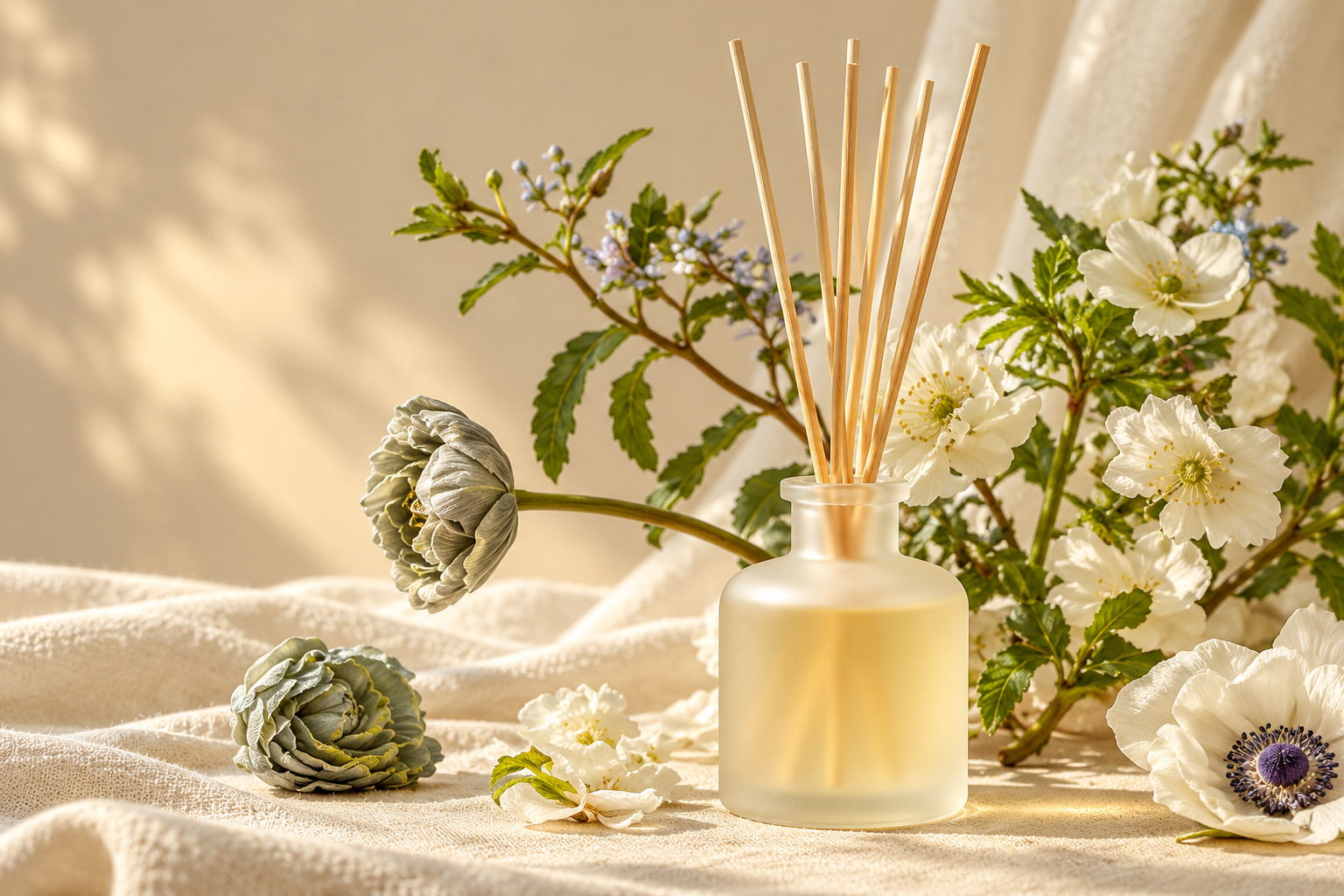
Don’t start by asking which incense is best. Ask where you want it. What do you need it for? A home that smells of flowers and herbs, a desk or tea table, something to wear, or a gift for a friend or an older relative. We begin with the need, then match it to a scent.
Why Do You Want Incense?
No incense is best for everyone. Each one suits a place. These four needs cover most people:
| You want | What to look for | Where to go |
|---|---|---|
| A home that smells good, without the heavy, harsh smell of a chemical air freshener | Fills a room, has no synthetic fragrance, does not sting | Floral scents, as heated incense pellets |
| A desk, a workspace or a tea table | Steady and unobtrusive, stays put, never covers the tea | Woody scents, as heated incense pellets |
| Something to carry, noticed only by people close to you | Close to the body, good to look at, reaches a little farther than a sachet | Incense bead bracelet |
| A gift | Good to look at, safe, suits most people | Herbal sachet, a small pouch |
What Are the Types of Incense Scent, and What Do They Smell Like?
Incense is several materials blended, which gives it layers and makes it easier to live with. The usual materials fall into five families, the same split we use on our Concept page:
- Wood: Sandalwood is soft, creamy and warm, and it lasts. Agarwood is cool, sweet and far-reaching. Jiangzhen wood is faint on its own, but it lifts a blend and carries it farther.
- Flowers: Rose is sweet and full. Roselle adds a little tartness. Osmanthus is the sweet scent of autumn.
- Herbs and leaves: Lavender is soft and sweet. Mint is cool. Lemongrass smells like lemon with a grassy edge.
- Resin: Frankincense is crisp, like pine needles. Benzoin is warm and sweet, like vanilla. It is hard to smell at room temperature and comes out when warmed.
- Citrus and peel: Chenpi is a warm tangerine scent. Buddha’s hand is fresh and lightly sweet, with a little bitterness.
A blend usually leans on one or two families and adds others for depth.
How to Choose for Your Need
Back to the table: where each need leads, and why. Pellets suit any room; below is where we would use each.
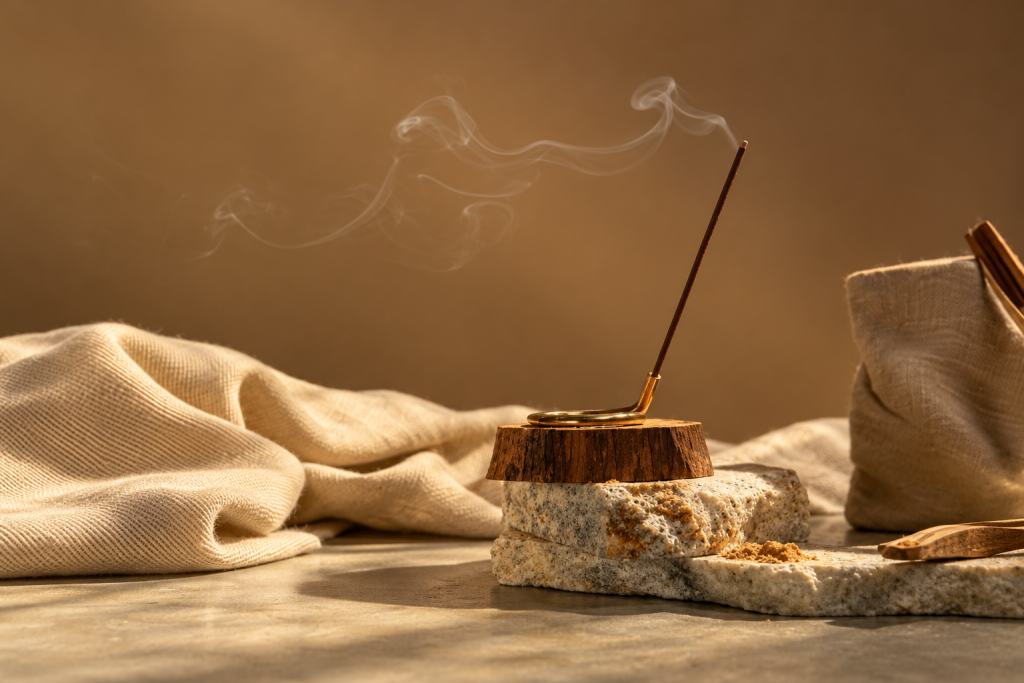
A home that smells good, without the harsh smell of an air freshener. Chemical air fresheners smell heavy and harsh. We want a natural scent that has presence but does not sting, and florals suit that best. Use incense pellets on a burner, and heat them. Burned incense also fills a room fast, but it leaves ash and powder. Its smoke carries fine particles that can harm your body, especially if you burn it often or in a room with no airflow. So we heat our incense and never light it. The scent rises slowly with the heat, with no smoke and no ash. (What is in the smoke: Is Incense Bad for You?) To pick one, try Osmanthus Moon, built on autumn osmanthus. Or try Singular Rose · Heated: a sweet rose with a little tartness from roselle.
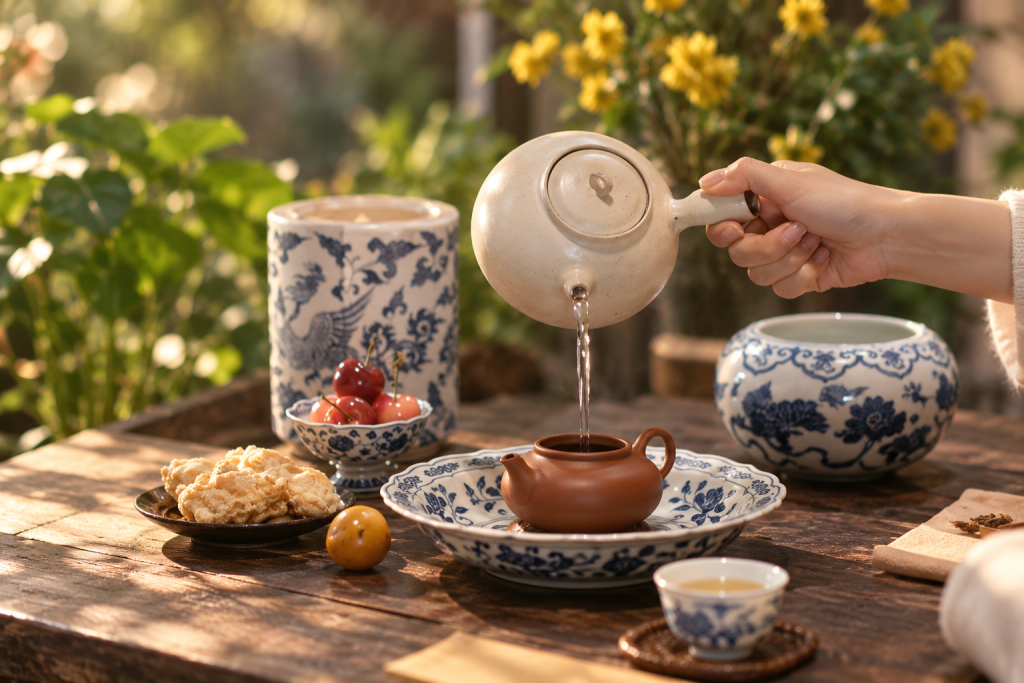
A desk, a workspace or a tea table. These need the same thing: a scent that is steady and stays put. It should not draw attention to itself or cover the tea. Wood is the surest choice, and sandalwood and agarwood both stay quiet. Heat incense pellets here too. To pick one, try Slow Heart · Heated, led by sandalwood, creamy and still.
Something to carry. If you want only people close to you to notice, choose an incense bead bracelet. It is a bracelet you wear for its scent, good to look at and fragrant too. Body heat and a little friction release the scent slowly, as a soft trace. It reaches a little farther than a sachet, about 30 cm around the wrist. To pick one, browse incense bead bracelets, such as Singular Rose · Worn or Green Hour · Worn.
A gift. For a gift, choose a sachet: a small pouch, a small present with good wishes in it. A sachet stays close to the body, about 20 cm, and never announces itself. It comes with a spare inner pouch. To pick one, browse Herbal Sachets, such as Singular Rose · Carried.
Not Sure Why You Want Incense? Picture a Few Moments
If you don’t yet know why you want incense, that is fine. Picture three small moments:
- You step inside, and a faint scent has stayed in the air.
- You turn a page or finish a cup of tea, and a trace of scent is still near your hand.
- Someone comes close, and only then notices a little scent on you. Not close, not noticed.
In thirteenth-century Hangzhou, burning incense was counted among four quiet pastimes of daily life, alongside making tea, hanging a painting and arranging flowers. Incense sat with tea, painting and flowers as one of the small, respectable things of a day. It had no purpose beyond making a short stretch of time look a little better. A life with such small worldly things has more warmth in it.
Most of our incense is worn or kept close, so only people near you smell it. That is a courtesy that disturbs no one. To try one, start from a scent you already like: if you like wood, begin with sandalwood. If you like flowers, begin with rose.
How We Make Incense
Someone in our family is sensitive to synthetic fragrance. Scents that hang in the air for hours made a room heavy and sharp, hard to stay in. So we started with plants. We grind botanicals to powder and roll them into pellets or beads by hand. Pellets release their scent with heat, and beads with body warmth, both slowly. No smoke, no ash, no synthetic fragrance.
The incense we make should not greet you at the door. You find it once you stop: a thread of rose, a little warmth of wood. Scent is something you notice, not something that is announced.
Scent is also a small courtesy in company. A scent worn close is smelled only by the people near you. It does not disturb anyone, and it does not talk over anyone. If you want to start learning small refinements, choosing the right blend is a good first one.
FAQ
What Is the Most Popular Incense Scent?
No reliable count says which scent is most popular. One signal is search: in the US, “sandalwood incense” is searched about 1,000 to 10,000 times a month (Google Ads, October 2026). Our advice is to start with sandalwood, or with rose if you like florals.
What Are the Different Types of Incense?
There are two ways to sort it: by form, such as sticks, resin, pellets, beads and sachets, or by scent, the five families above. Sticks are lit, pellets are warmed, and beads and sachets are carried close. Our guide to the types of incense goes through each form.
What Do Incense Scents Mean?
A scent has no fixed meaning. Cultures use incense for different things, such as offerings in temples. In Song China, burning incense sat beside making tea, hanging pictures and arranging flowers as four quiet pastimes. What a scent does to the body is another matter, and little rigorous research exists. The National Center for Complementary and Integrative Health (NCCIH) says so about aromatherapy. We don’t claim incense treats anything. We only say how it smells.
What Is the Best Smelling Incense?
Smell is personal, and no incense pleases everyone. Look at three things. Which scents do you already like: woody, floral, fruity or green? Is it made from plants, or does it have synthetic fragrance added? (How natural materials differ from synthetic lookalikes: What Is Incense?.) And where will you use it? Once you know your scent family, choose within it.
How Do I Choose Incense?
Three steps. First, decide where it will go: your home, a desk or tea table, your wrist, or a gift. Second, pick a scent family: wood for steady, flowers for floral, herbs and leaves or peel for fresh. Third, pick a form: heat pellets to scent a room, wear beads for a trace on yourself, or give a sachet. If you are unsure, begin with sandalwood or rose.
Handmade to order in small batches of 20, in rural Zhejiang, China.

How to Make Incense Pellets: From Plant Powder to a Honey-Kneaded Pellet
How we make incense pellets by hand: 50-mesh powder, honey-kneaded dough, a rest, seven days of shade-drying. Made…
What Is Incense? What It Is Made Of, and How to Tell Good Incense
Incense is wood, resin and plants bound into a stick, cone or bead, or a blank stick dipped…
Chinese Tea Culture: Why Tea and Incense Belong Together
Where tea culture comes from, why tea and incense have shared a table since the Song dynasty, and…
The scent behind this story
Osmanthus Moon · Heated
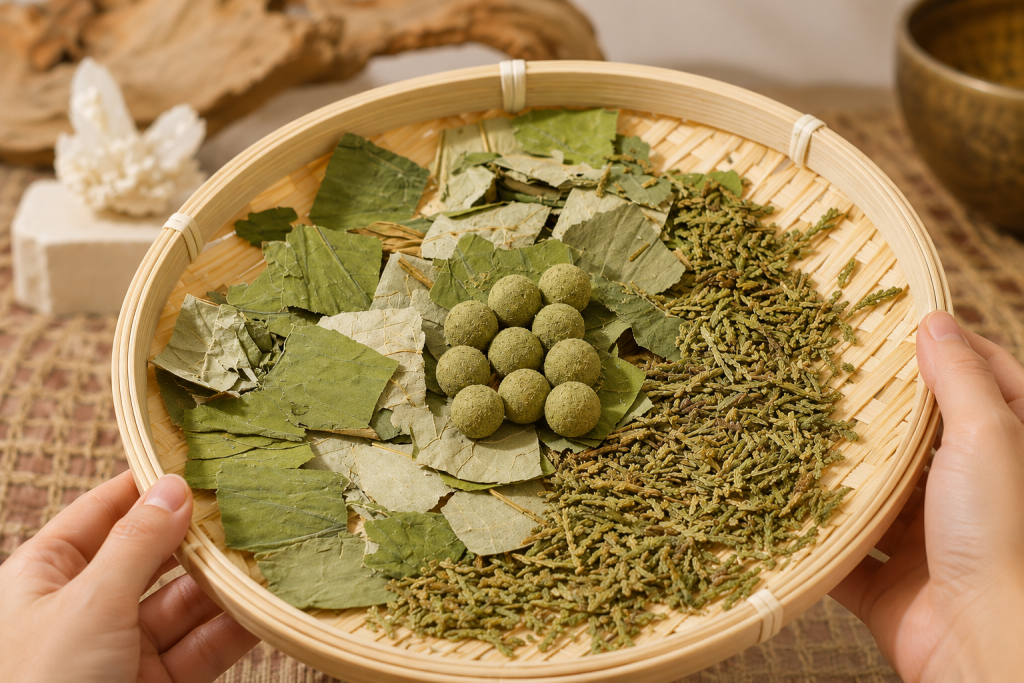
Honeyed osmanthus at the front, a touch of rose and clove, sandalwood and agarwood underneath: 35 hand-rolled osmanthus incense pellets in a white porcelain jar, each rolled in ground osmanthus. Heated at 150°C / 300°F, never burned, so no smoke and no ash. Our pick for autumn evenings at home. An incense burner is not included. Heat the pellets on a burner at 150°C / 300°F and never place them directly into a flame. How to use is below.
$68.00
View product →